
Very cool.

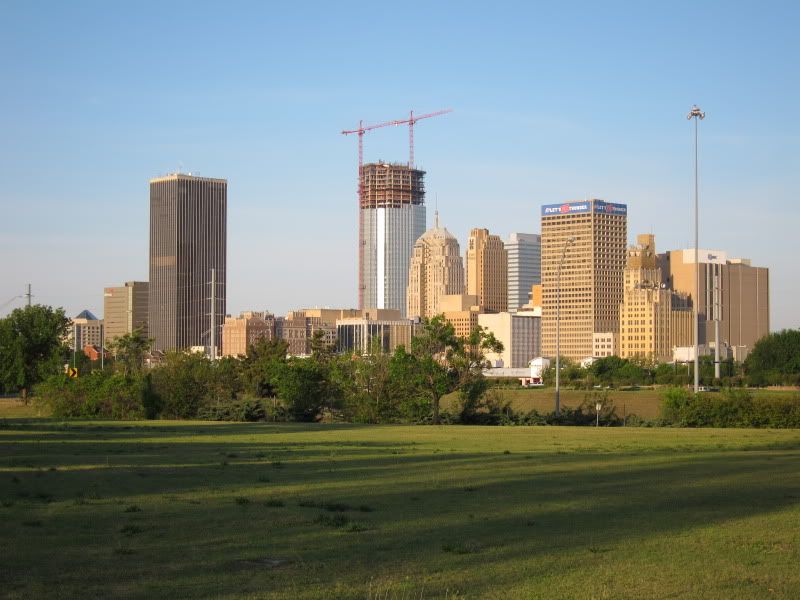
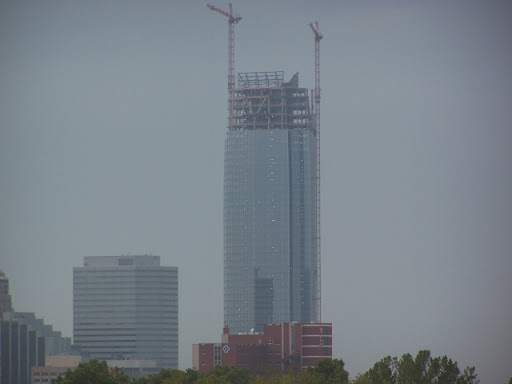
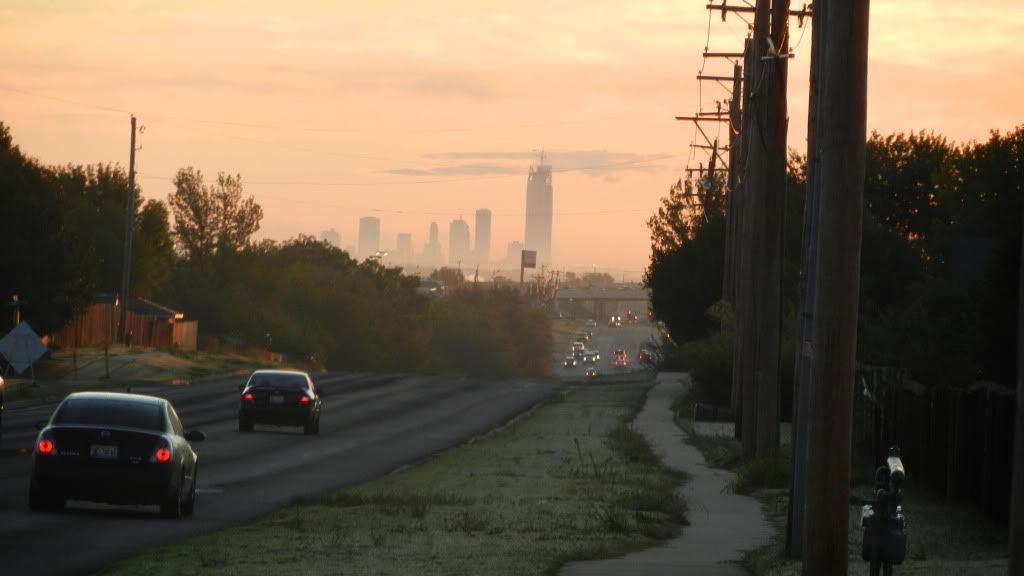



I agree. It's too big both in height and mass/width. Plus, with the hazy sky and the road and sidewalk in the foreground, it looks like it would be the skyline of a third-world, desert, oil-producing country. Maybe that's not a coincidence...Stargazer wrote:That is crazy tall... looks out of place...

This. I don't care how much taller it is than the rest of DT, that thing is legit.S33 wrote:Looks badass - If it were proposed for Omaha, you all would be changing your shorts.
No kidding! I'll take that any day. Out of place? no way, just an opportunity for more infill ;)iamjacobm wrote:This. I don't care how much taller it is than the rest of DT, that thing is legit.S33 wrote:Looks badass - If it were proposed for Omaha, you all would be changing your shorts.



I can see the top of it from my upstairs bedroom window.Brad wrote:I saw it on a TV commercial yesterday during one of the football games.

You, sir, are the ultimate contradiction.StreetsOfOmaha wrote:Many people (and I agree with them) believe that massive skyscrapers, like the classic American suburb, represent an egregious misallocation of resources and that they really don't have a future when we start to think about resource and energy scarcity. For this reason, places that are over-burdened with these structures (chiefly places like NYC and Chicago) are not positioned well to cope with future realities.
It's a little like putting up a massive, elevated, urban freeway. Oops, I guess we boo-booed, too.
I believe he means you make no sense.StreetsOfOmaha wrote:How so?

Well, for someone who has pounded home his strong distaste for low density developments surrounded by vast parking lots and empty spaces, and who seems to have as his mission in life transforming America's cities from what most of them are to high density neighborhoods feeding into dense urban cores, criss crossed with trolleys, subways, bike lanes, and made inconvenient for automobile usage, to now declare that cities like Chicago and NYC (and I might add Toronto, Seattle, San Francisco, Dallas, Minneapolis, Denver, Miami, Atlanta and several others) are now becoming overburdened by high density skyscrapers, well, my head is beginning to spin.StreetsOfOmaha wrote:How so?
You might have. Sure, these cities seem to be doing fine now, just as most people are continuing their happy-motoring lifestyles. But there will be a day--and it may be sooner than later--when these megastructures will become a burden. Where will future energy come from to up-keep them? How can they be adaptively re-used once they can no longer be maintained? They'll most likely turn into vertical ghettos. And, don't get me wrong, as far as I'm concerned this has nothing to do with global warming or anything like that. I know some people hear certain words like "energy scarcity" and they automatically make some association to global warming or some other conflated issue (not saying you are one of these people).nativeomahan wrote:I have spent enough time in NYC, Boston, DC, Chicago and San Francisco to know what a great city looks and feels like. I am just confused by your latest post. Maybe I read it wrong.

In this instance, what does that have to do with the Suburbs? If our local economies eventually reflect the financial situation of our federal government, which is a ticking time bomb, then you will find that the closer you get to rural areas, is where you will find small factions of people teaming up for security and self-sufficiency.Stargazer wrote:While I think Streets is an unhappy person in general and would find something else to whine about if he couldn't find it here... I personally think our suburban lifestyle is a ticking time bomb as well, not because of energy sustainability. Most Americans don't realize just how dependent all we have here is on the status of the US dollar as the world's trade currency of choice. If that ever changes, and with the way Washington is waffling around on addressing our astronomical debt pile, it may well sooner than later... most of our population is going to end up roaming the streets out here like zombies.
We all have our gripes, yours is clearly city planning, and clearly, mine is the above. I was giving you |expletive| with the troll comment, fyi.StreetsOfOmaha wrote:Jeff, you're actually totally correct. While it's belittling to classify my comments as whining, you are 100% right. I am extremely unhappy right now. Everything I see around me is a huge, embarrassing failure. It kind of wears you down after a while. Albany is a disheartening, decaying, decrepit, depressing |expletive| hole. It's all of America's failures rolled up into one location without any redeming qualities (except the ones that have to do with owning a car and being able to "escape" to some of the nicer, but still |expletive|, places in the region). Every day that I walk out my front door I'm reminded of how far we've fallen as a society. For people who shelter themselves from reality in the suburbs or behind a windshield... well, as you described, the day of reckoning is coming. I've just gotten a nice preview living here in New York State.
And yes, I know. That's not a happy, comfortable thought. That's kind of the point.
Tree houses, that could be fun. I think Street's point is that it takes a functioning electrical grid, teams of highly-skilled engineers, and significant resources to sustain massive structures - which would render those structures as massive, decaying artifacts in times of depression.Linkin5 wrote:So if suburbia=bad and dense tall buildings=bad, what is the happy medium? Sprawling 10 story buildings clustered together? Or should we start building underground tunnels to live in, or maybe treehouses?
Fed, central banks slash dollar borrowing costsIt’s only coordinated in the sense that the Federal Reserve is printing the dollars and the European Central Bank and other central banks put the greenbacks in the virtual vaults of mangled commercial banks that are drowning in European debt. See story on Fed action.
But it’s not coordinated in the sense that the ECB taking any bold action of its own to stem the euro-zone debt crisis.
The ECB on Tuesday accidentally wandered into quantitative easing, basically when banks didn’t want to commit to lending money to the Frankfurt-based central bank, which effectively meant that a tiny sliver of the purchases of Spanish and Italian debt it made were funded from money printed out of thin air.
FRANKFURT (MarketWatch) — Global central banks announced coordinated action on Wednesday to shore up liquidity in the financial system as Europe’s banking system showed growing signs of stress.
The moves were announced in statements issued simultaneously by the U.S. Federal Reserve, the European Central Bank, the Bank of England, the Bank of Japan and the Swiss National Bank.
“The purpose of these actions is to ease strains in financial markets and thereby mitigate the effects of such strains on the supply of credit to households and businesses and so help foster economic activity,” the banks said.
The central banks agreed to lower the pricing on existing temporary U.S. dollar liquidity swap arrangements by 50 basis points, putting the new rate as the U.S. dollar overnight index swap rate plus 50 basis points.
Are you seriously suggesting that there is no in-between? It's either suburbia or skyscrapers? This is where I'm confused that what I'm saying is so befuddling to people.Linkin5 wrote:So if suburbia=bad and dense tall buildings=bad, what is the happy medium? Sprawling 10 story buildings clustered together? Or should we start building underground tunnels to live in, or maybe treehouses?
But in a place like NYC this would be impossible and without the skyscraper things would be even more sprawled out, would it not?StreetsOfOmaha wrote:Are you seriously suggesting that there is no in-between? It's either suburbia or skyscrapers? This is where I'm confused that what I'm saying is so befuddling to people.Linkin5 wrote:So if suburbia=bad and dense tall buildings=bad, what is the happy medium? Sprawling 10 story buildings clustered together? Or should we start building underground tunnels to live in, or maybe treehouses?
Well, since you asked, Midtown Crossing, the Old Market, Aksarben Village, the type of development we're seeing in North Downtown, the Near South Side/Little Italy, and Market West, as well as neighborhoods like Benson, Dundee, and South Omaha are all great examples of places on the spectrum of livable urban density.