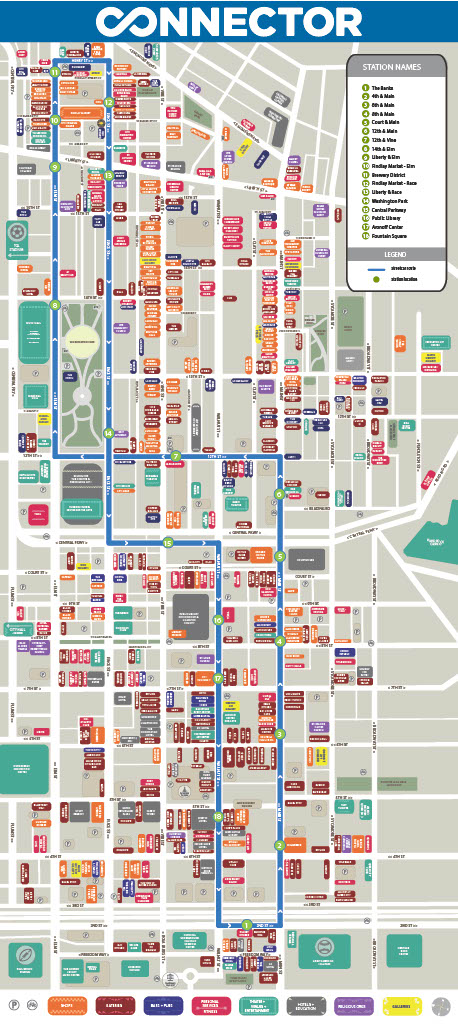
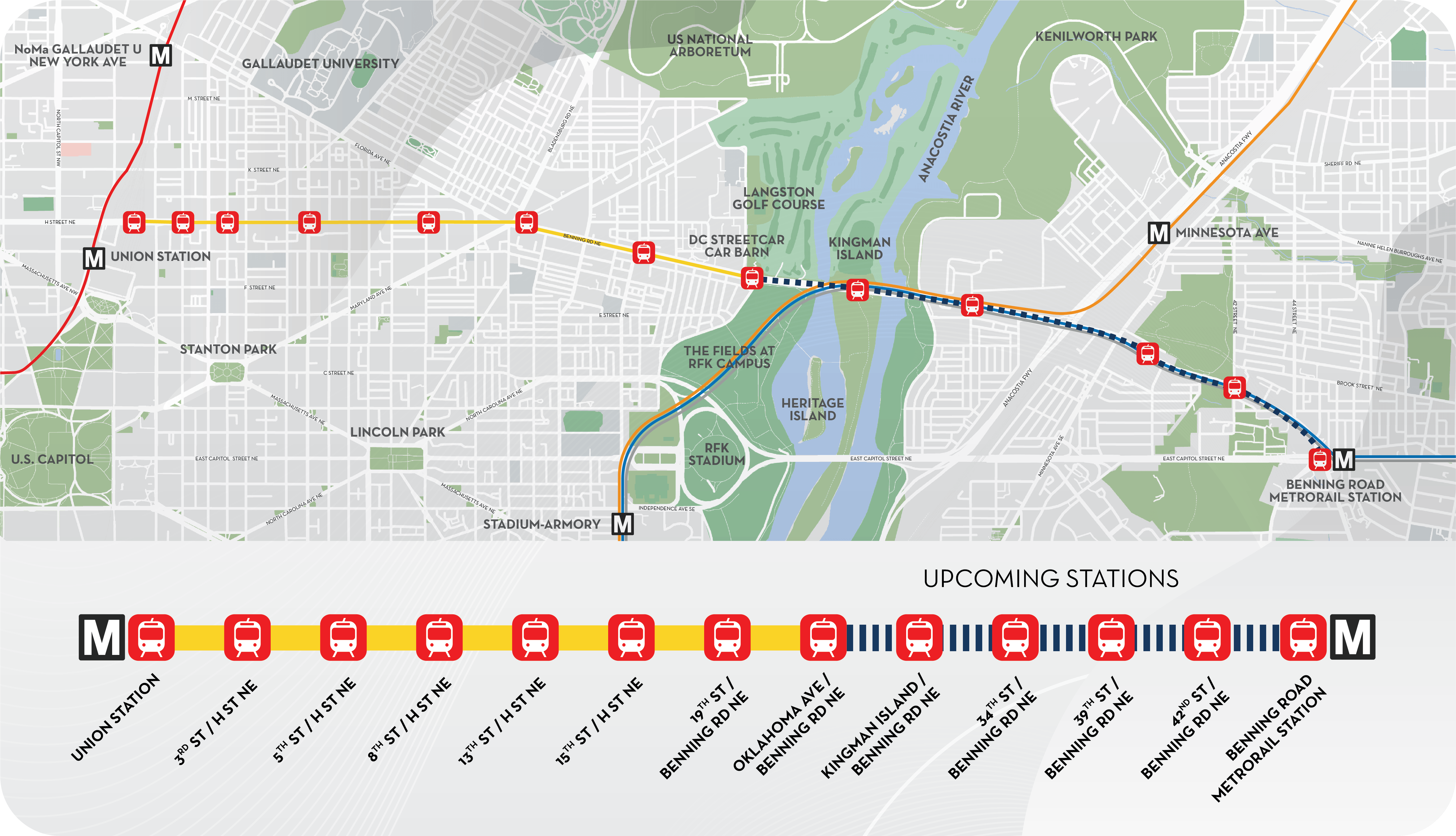
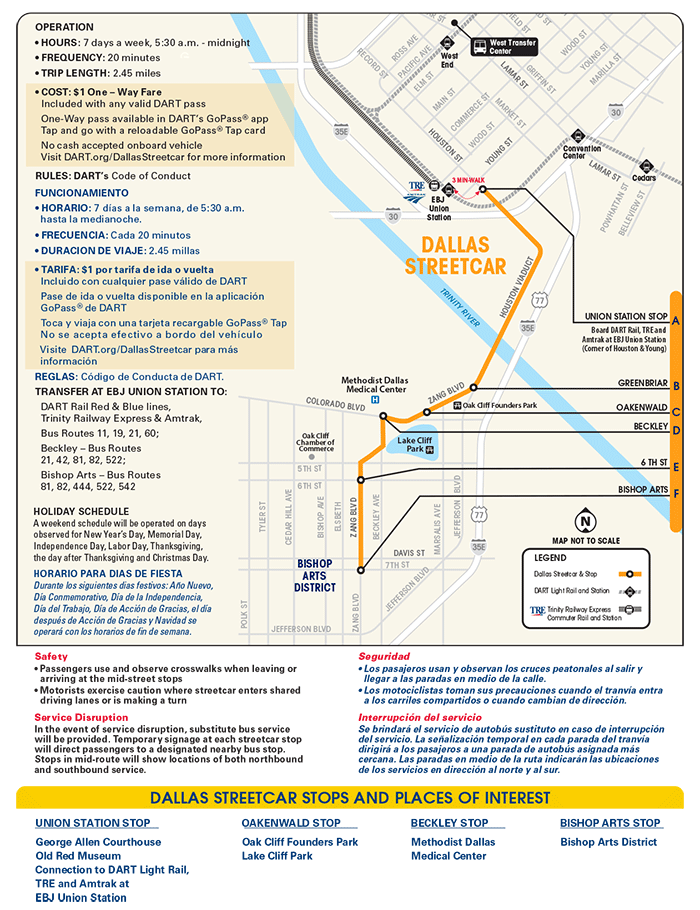
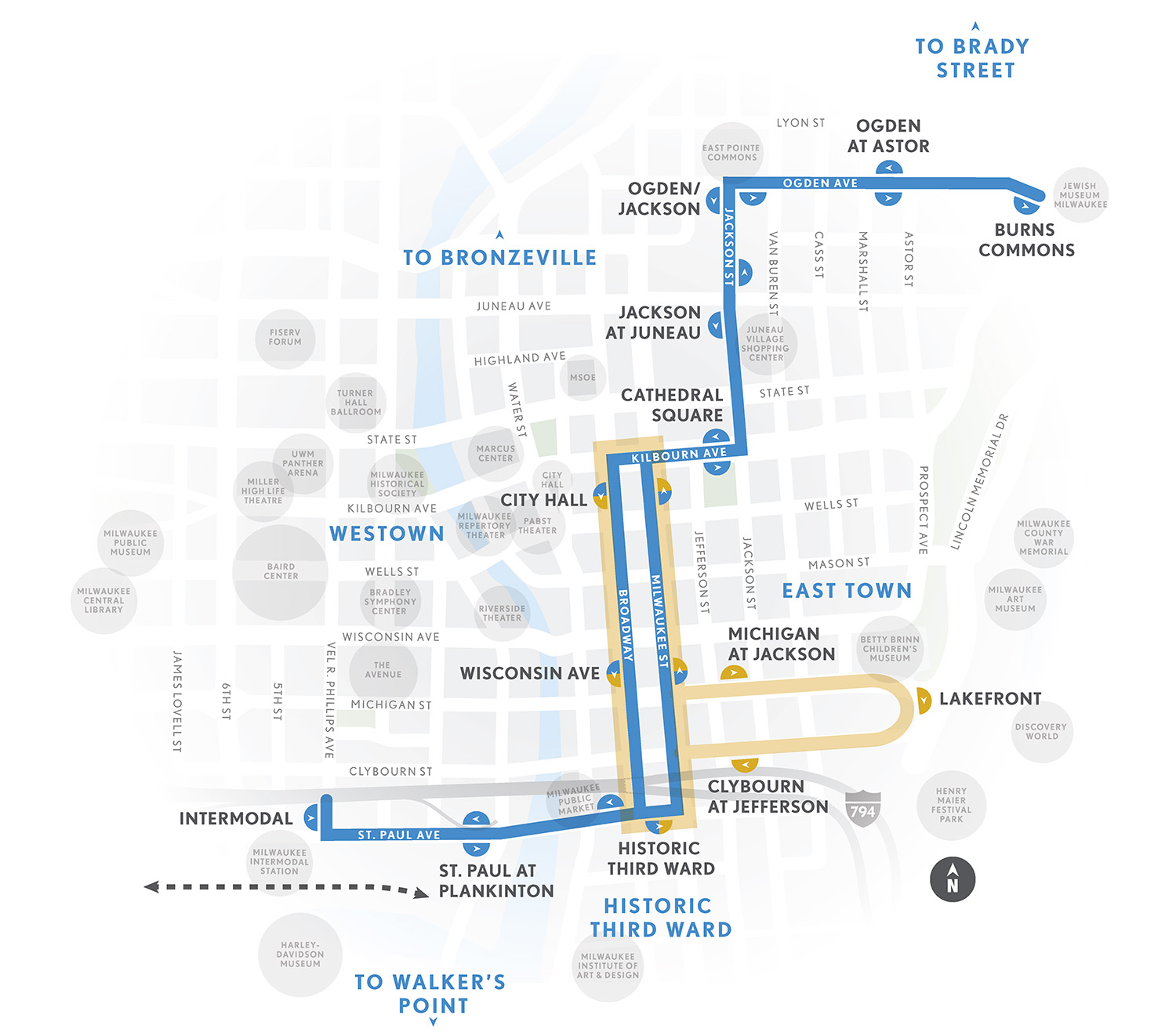
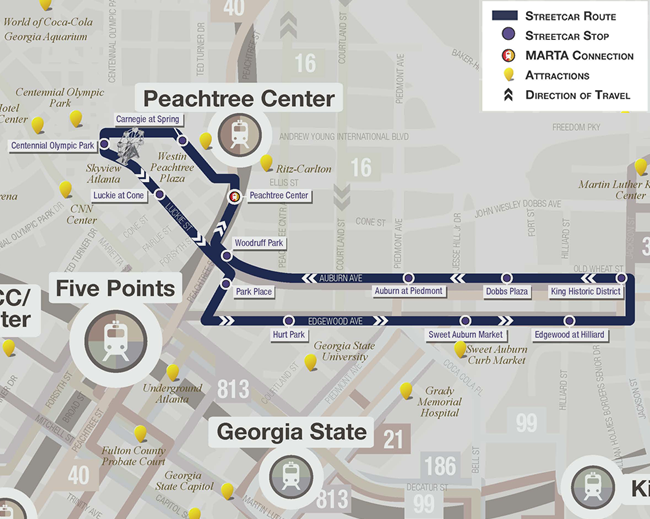
Route design -If you look at the ridership numbers of modern streetcars, the highest ones use a linear line. You are moving in a direction to go somewhere but have to ability to hop from one attraction/district. This is a dual function. You can ride the streetcar to connect to another line. (bus, rail, etc.) The cities on the bottom (Atlanta, Milwaukee) use a circuitous route or loop. This is a tourist hopper and nothing more. This limits ridership for locals because it doesn't take you places outside of the loop.
Here are the annual ridership numbers I could find from end of 2023
Portland- 2.8 million
Kansas City- 1.8 million
Tucson- 1.7 million
Seattle- 1.3 million
Detroit- 896,000
Cincinnati- 846,000
Washington DC- 721,000
Dallas 701,000
Milwaukee 453,000
Atlanta 184,000
Since you mentioned route design, lets do some comparisons.
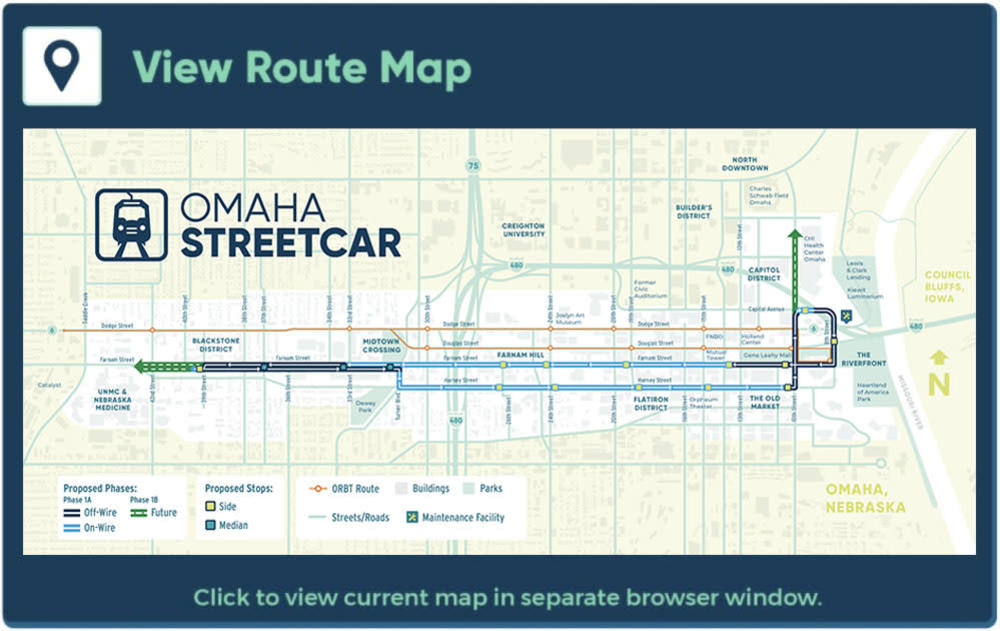
Omaha
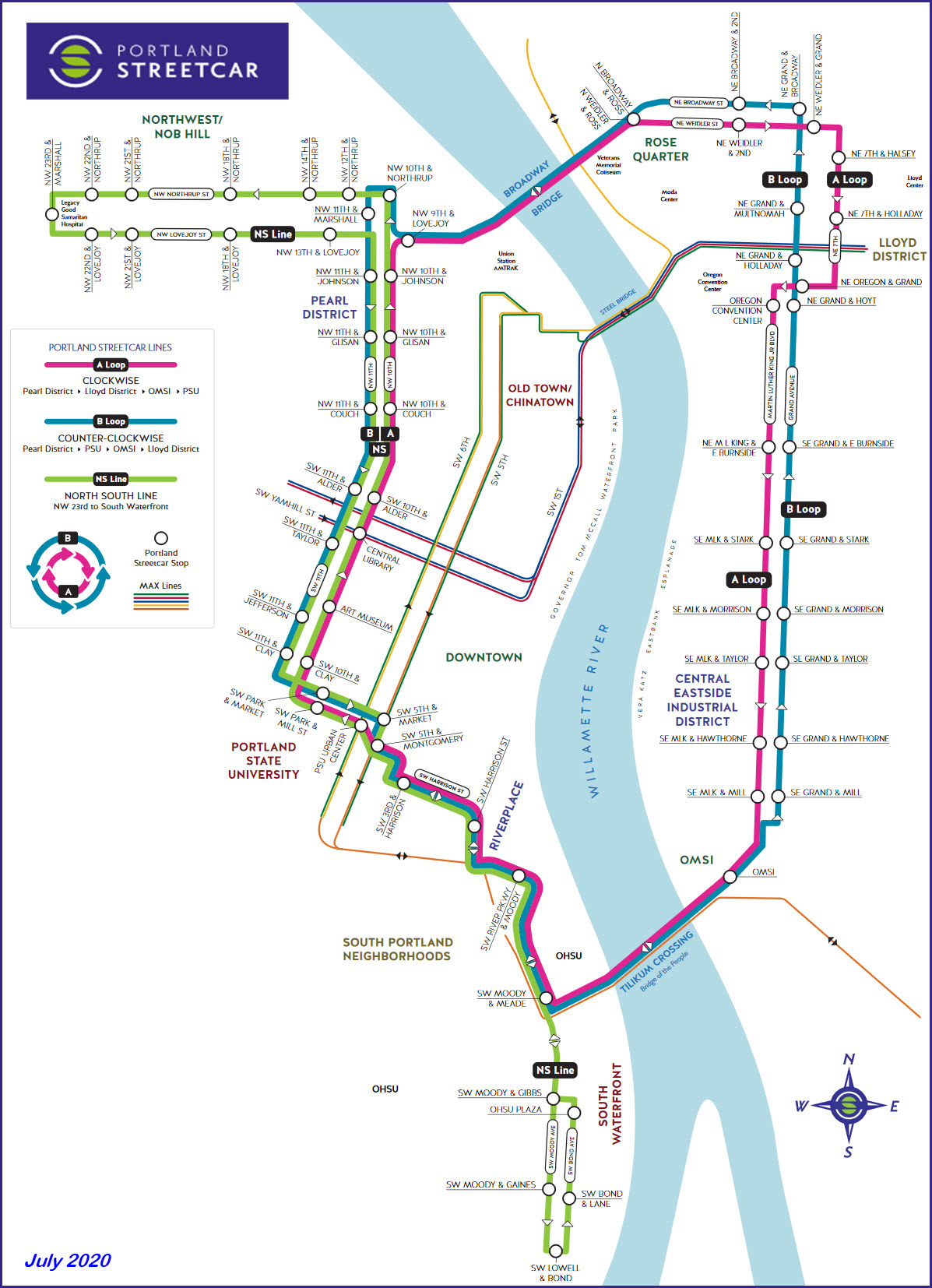
Portland
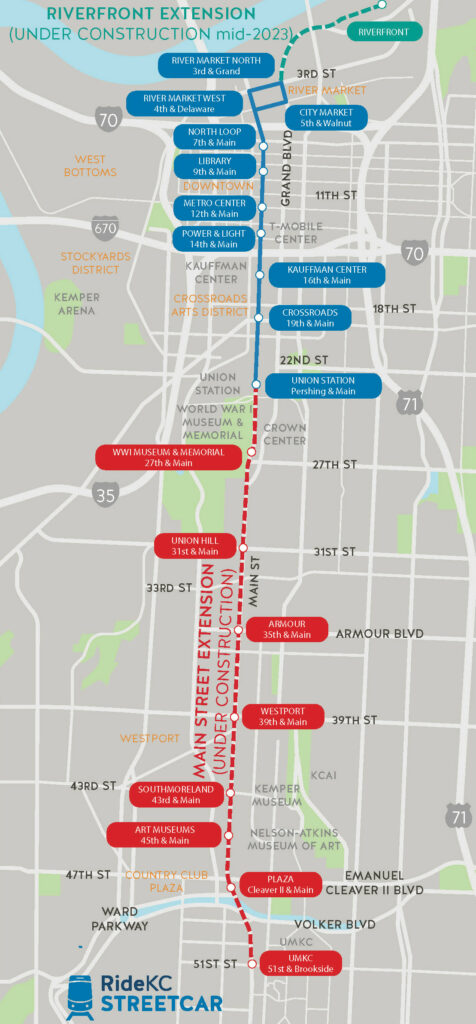
Kansas City (Red UMKC Extension set to open in 2025)
KC, along with Tuscon, is the huge outlier here - if you tell someone that Portland has an esoteric public transportation option that a bunch of people take, nobody would be surprised. It's Portland.
KC is, if not the same, a very very similar ethos to Omaha. It's extremely car-centric, public transportation is seen as an absolute last resort for poor people. Most people who live there never take public transportation and do not include it in any consideration set. And yet the streetcar was a huge, largely unexpected success.
Omaha is being smart in being a relatively fast follower of a very successful plan from a very culturally similar metro (along with similar climate, similar development pattern, etc.). If our streetcar is half as successful as KC's it will still be a huge success.
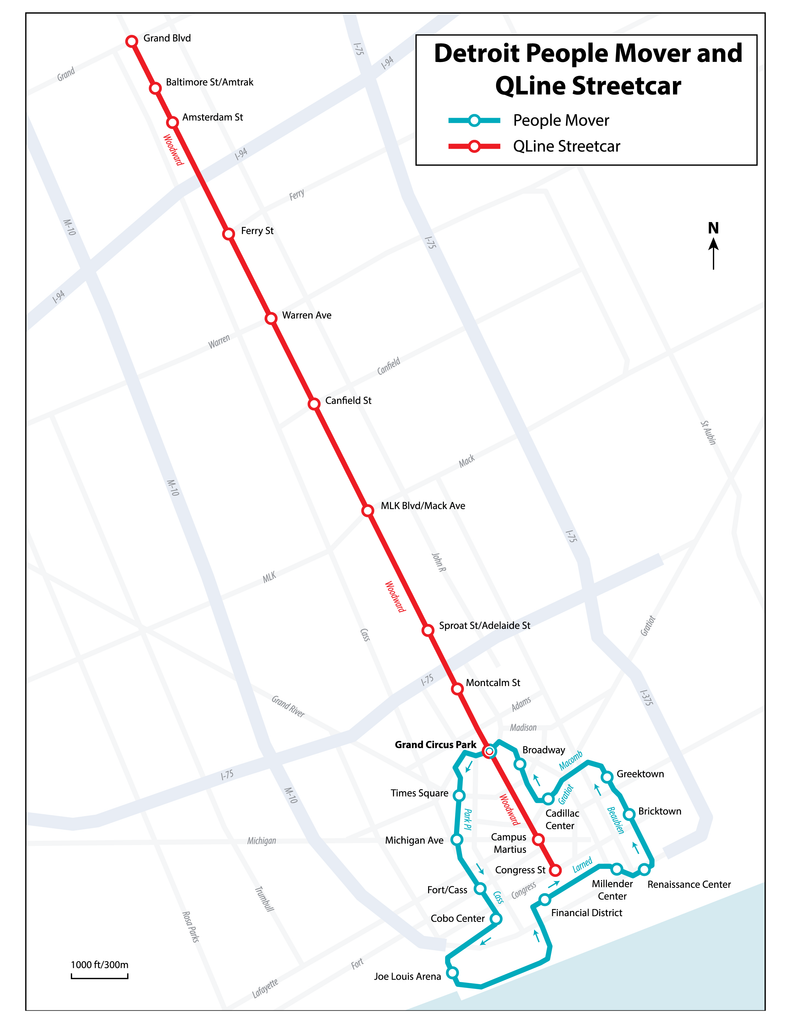
Visual overload! LOL! Thanks for adding the pictures, Garrett! I may have missed one, but at least we can see the grand picture.
The bottom performing routes are all loops, The ones climbing the list in ridership tend to favor linear routes. Portland's numbers are not as impressive as you would think. They have been running around 20 years and have 3 lines: 2 loops, 1 linear. So 2.8 Mil is averaging 930,000 per line. Seattle has 2 lines so 1.3 Mil is average 650,000 per line. So Kansas City and Tucson are crushing it with their starter line.
I would not be shocked Kansas city doubles ridership once their extension is built. Tucson should level off. They talked about a Northern extension but decided to do BRT instead. Omaha could very easily run up the ranks chasing Kansas City.
Some of the complaints on lower performing routes were headways. Dallas has a really short line, only 6 stops, and upwards to 30 minute headways. Yikes! The line has good bones. It's just too short, not enough connections, and service is too slow. Atlanta has been called the slowest streetcar in the nation at average speeds of 5 mph. Too many cars jumping in front of it forcing it to stop at every light signal. On top of that, they light cycles are really long. Really slow and poor connectivity.
I think if we were to learn from these other systems I would some it up as this:
1. Linear routes attract more riders and makes it easier to add extensions
2. Putting a line through an area with established districts will accelerate ridership faster versus building districts from scratch.
3. Street running routes may slow down service or get stuck in traffic. Plan the route for future conversion to dedicated lanes on straightaways if delays are happening.
4. A simple map that is aesthetically pleasing will draw in new riders. If people have to think too hard to figure out of map, they will give up and go back to driving. Simple map-Kansas City, Complicated map- OKC
I hope we surpass KC in everything. What a terrible "city".
I'm glad they finally got one thing right with their streetcar though.
Also: I finally got to spend some time on Portland's transit: Amazing city and phenomenal transit options for a city in North America bot much bigger than KC. That's what I want. I want Omaha to be the Portland-lite of the midwest.
Noticed that the Oct meeting has been cancelled. I think it was mentioned before, but is this just happening because there is no new development to discuss?
Between the $113 Million for the Children's museum and $87 Million for the Beam apt building, that is another $200 Million in development that can be added to the list at least somewhat aided by the streetcar.
It is amazing the amt of money being invested in downtown and just outside downtown Omaha in the past few years and coming years.
Mutual: $600 Million
streetcar: $459 Million (including $70 million for utilities)
Riverfront parks: $325 Million
Duo: $163.7 Million
Brickline apts and parking garage: $115 Million
Children's museum: $113 Million
Luminarium: $107 Million
Holland Center expansion: $103 Million
Steelhouse Omaha: $103 Million
Beam apts: $87 Million
That is over $2.17 Billion in investment. And keep in mind, this doesn't include anything in the Blackstone district, UNMC or edge district, Millwork District, Union Omaha soccer stadium or any of the development for apts along Dodge.
The downtown/midtown core is really booming right now!
Awesome list! Also doesn’t include the announcement for the Mutual midtown campus that the mayor said will be coming soon. Back in 2022, Lanoha said it would top $400 million so that number has definitely gone up.
I didn’t catch the exact phrasing, but Stothert did say something about the $1.2 billion by the end of the year investment had risen in some way to $1.5 billion. Not sure if that included projects that will be announced later or what
Edit: listened again, she said that the $1.2 billion would be underway by the end of the year, and that the Beam would bring the total up to $1.5 billion. That’s might include the costs for the museum and parking garages as well, but then she also mentioned 6 more projects in various stages of planning.
skinzfan23 wrote: Thu Oct 24, 2024 4:35 pm
Between the $113 Million for the Children's museum and $87 Million for the Beam apt building, that is another $200 Million in development that can be added to the list at least somewhat aided by the streetcar.
It is amazing the amt of money being invested in downtown and just outside downtown Omaha in the past few years and coming years.
Mutual: $600 Million
streetcar: $459 Million (including $70 million for utilities)
Riverfront parks: $325 Million
Duo: $163.7 Million
Brickline apts and parking garage: $115 Million
Children's museum: $113 Million
Luminarium: $107 Million
Holland Center expansion: $103 Million
Steelhouse Omaha: $103 Million
Beam apts: $87 Million
That is over $2.17 Billion in investment. And keep in mind, this doesn't include anything in the Blackstone district, UNMC or edge district, Millwork District, Union Omaha soccer stadium or any of the development for apts along Dodge.
The downtown/midtown core is really booming right now!
Just goes to show how there is an absolutely stoopid amount of money in this town. And I’m all for it!!
EricHaley wrote: Tue Oct 29, 2024 2:03 pm
Just goes to show how there is an absolutely stoopid amount of money in this town. And I’m all for it!!
And the crazy part is, most of it is from Omaha citizens. Its not like there are a ton of international companies spending for these developments. Quite a few of them have originated Heritage Services. The philanthropic community in Omaha has to be one of the strongest in the entire country.
Well it's all well and good except for the huge amount of TIFF money that is being handed out. Imagine how low our property taxes would be if all of the developments were paying their property tax!
We should be looking at what the lost tax receipts are on the valuation prior to the blighted designation. Probably not much. Of course, if these developments never happened in lieu of incentives, there'd be no additional property tax receipts anyway. Now, fast forward 15-20 years, huge tax windfall waiting.
Shoot for the Moon... if you miss, you'll land among the stars.
That’s what I was wondering, when did tif become widely used, was it in the early 2000’s. If so we should be seeing some of those increased tax payments starting soon from a lot of those older projects.
skinzfan23 wrote: Tue Oct 29, 2024 10:54 pm
That’s what I was wondering, when did tif become widely used, was it in the early 2000’s. If so we should be seeing some of those increased tax payments starting soon from a lot of those older projects.
Good point, I wonder if there are records of this that we can track to watch them start to pay.
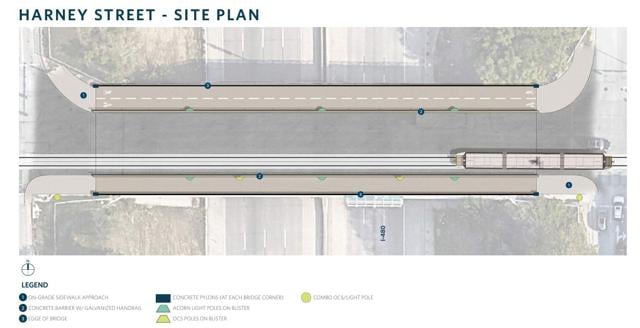
Early next year, contractors will begin taking down the Harney Street bridge that spans I-480 and replacing it with a new, stronger bridge. The process will take about a year, said Austin Rowser, Omaha’s deputy public works director.
Once the Harney Street bridge is complete, demolition will start on the bridge at Farnam Street, one block to the north, in early 2026.
The new streetcars will weigh about 90,000 pounds — 45 tons — because of the large batteries they must carry, Rowser said. By comparison, the Omaha Public Works Department’s heaviest vehicle, a tandem-axle dump truck, is 30 tons.
Early next year, contractors will begin taking down the Harney Street bridge that spans I-480 and replacing it with a new, stronger bridge. The process will take about a year, said Austin Rowser, Omaha’s deputy public works director.
Once the Harney Street bridge is complete, demolition will start on the bridge at Farnam Street, one block to the north, in early 2026.
The new streetcars will weigh about 90,000 pounds — 45 tons — because of the large batteries they must carry, Rowser said. By comparison, the Omaha Public Works Department’s heaviest vehicle, a tandem-axle dump truck, is 30 tons.
The new bridges will have stronger upright piers supporting a bulkier substructure beneath the bridge deck than the current spans, Rowser said.
The streetcar line and motor vehicle traffic will share three lanes on the new bridges, which also will have sidewalks on both sides. They will have ornamental street lighting that matches the rest of the streetcar route.
I just hope that they put up decorative fencing as well, hopefully black unlike the fencing there currently, but I am happy there is going to decorative lighting.
Garrett wrote: Wed Oct 30, 2024 10:05 am
I just hope that they're building the infrastructure to have the ability for exclusive right-of-way for the street car
I agree.
I'm curious how they will address on-street parking. If they have the streetcar to run against the curb, parking could be on the left of it. This would create a barrier from moving traffic. If the trains are street running with traffic, parking could be on the right side. Now you have the streetcar potentially getting stuck in traffic and cars cutting across the lines to park.
I'm fine with eliminating the on-street parking. It doesn't mean the spots are lost but dispersed to nearby streets or garages. This opens up more options for design. I brought this up with the Harney Bikeway as well. The bike lane is way too skinny because the on-street parking is taking up so much space.
Omaha747 wrote: Fri Nov 01, 2024 3:17 pm
I was really expecting to see some noticeable construction on this project by now. Is it now unlikely to even open until late 2028?
The timeline has been pretty fluent. They are working on relocating utilities this year. Next year we will start to see more visible construction, and the Harney st bridge is going to be replaced.
Still planned to be in service in late 2027 or early 2028.
Omaha747 wrote: Fri Nov 01, 2024 3:17 pm
I was really expecting to see some noticeable construction on this project by now. Is it now unlikely to even open until late 2028?
1/4 to 1/3 of KC Streetcar construction time was dedicated to utilities.
I probably need a recap as I haven't been very on top of this project? What exactly has been done so far?
I knew and even saw some construction barriers along the curb along spots along Farnam, but I was unclear if that was specifically in prep for the streetcar. Has there been any sort of tangible progress made or currently being made. Are they actively moving utilities for the streetcar, can you see people out surveying, marking utilities and such? I'm very out of the loop.
Busguy2010 wrote: Tue Nov 05, 2024 8:56 am
I probably need a recap as I haven't been very on top of this project? What exactly has been done so far?
I knew and even saw some construction barriers along the curb along spots along Farnam, but I was unclear if that was specifically in prep for the streetcar. Has there been any sort of tangible progress made or currently being made. Are they actively moving utilities for the streetcar, can you see people out surveying, marking utilities and such? I'm very out of the loop.
They are actively moving facilities throughout the streetcar line. Right now, they are in Blackstone.
Do you know what part of the progression Blackstone is? Is there a lot of that process already done? Is there an up to date timeline as to when this initial process will be done?
MUD relocation streetcar phase 4 37th st - 42nd st is projected be finished 12-6-24. These projects rarely end on schedule because they have to schedule with businesses to shut off gas/water and replace meters and the project isn't finished until all customers are off the old mains.
In Blackstone MUD is finishing up their gas main work, then we should see approval of the contract for the rest of the utility work in the next OSA meeting. I think that work is anticipated to be completed by the end of 2025, and then the trackwork will probably follow in 2026 and 2027. They still have to bid out the remaining utility work to the east of I-480 which will probably take until 2027 to complete. I would guess that if the route is open in 2028 then things went generally well.
GrowOmaha snippet: in addition to saying Omaha is on track for $1.5 billion in development on the streetcar line by the end of the year, the 15 year projection is now up to $4 billion, from MuniCap’s initial $2 billion
Mayor Stothert also said she’s planning on sitting down with Auditor Foley to discuss TIF, particularly with the streetcar.