An interesting excerpt about the psychology of streetcars. It argues against some points I've made about the role streetcars play in a transit network, but still upholds that they provide significant benefits to the areas around them.
Aaron Weiner wrote:
THE PSYCHOLOGY OF STREETCARS
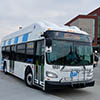
To the extent that streetcars are a boon to a city’s transit network, it’s more a matter of perception than actual mobility. The H Street streetcar will largely run along the exact same route as the X2 bus, yet it’s expected to give a substantial boost to the corridor. That’s partly because streetcars tend to offer a smoother and quieter ride than buses, and partly because a streetcar’s tracks and fixed route make it easier for visitors to figure out. But mostly it’s a simple question of psychology.
“You see it in D.C. in terms of the general population that takes the Metro,” Blumenauer says. “People who wouldn’t get on a bus at gunpoint will take the Metro. And the streetcar’s even friendlier because it’s aboveground.”
“It’s a feeling thing,” Harscher says. “Once you ride the system, you really feel like you’re taking a step down when you ride a bus.”
That’s why the streetcar could be such a boon to H Street businesses, even though it will largely replicate the X2 bus. There’s no Metro stop near the street’s nightlife epicenter, and some would-be visitors are kept away by the X2’s reputation for dodgy service. Even if the streetcar won’t get people to H Street’s bars and restaurants any faster, they’re likely to feel more comfortable about making the trip.
“I think the perception will change,” DeMayo says, “even though it’s not going to be any easier or harder to get to H Street.”
The question is how long that change will last. The D.C. streetcar may initially seem shiny and clean compared to buses, but it could also quickly come to resemble another X2. At that point, will the people who formerly took taxis to H Street or kept their distance continue to come by streetcar? Portland, while a model for D.C. in other ways, doesn’t offer much in the way of precedent because of its different demographics.
But comparisons to bus and heavy rail may not be entirely appropriate, given that streetcars are principally aimed not at long commutes, but at short trips currently taken by foot, by car or not at all.
“We’re looking for those relatively short trips and to provide another option to do that,” says Ronaldo T. Nicholson, DDOT’s chief engineer. “That’s what streetcar is for.”
Part of the idea, particularly in cities with few options aside from driving, is to cut down on auto congestion during the day and on weekends, when people travel short distances between meetings or to the movies. Nicholson says the goal is to provide “another option for single-occupancy vehicles within the city, within the neighborhoods.”
But within downtowns, the streetcar’s main function might not be to replace cars, but to complement the pedestrian experience. Harscher refers to the streetcar’s role as “extended pedestrianism.” Douglas Hooker, executive director of the Atlanta Regional Commission, the planning agency for the 10-county region around Atlanta, calls it “enhanced pedestrianization.” D.C.’s study says it “extends the walk.”
In this capacity, it serves the almost paradoxical double function of both replacing walking trips and encouraging them. Instead of walking three-quarters of a mile to run an errand, a person might hop on the streetcar instead. But rather than ordering a product online, a person might opt for a streetcar ride to a shop a few blocks away, and perhaps pick up a cup of coffee or a bottle of wine while strolling back to the office. It’s not a fundamental change to how people already operate, but rather an extension that promotes longer and more frequent trips — and the economic gains that accompany them.
“It’s pretty easy for people to hop on and off the streetcar,” Blumenauer says. “It extends the pedestrian experience quite significantly, particularly in a city like Portland where it rains all the time.”
Of course, there’s no reason a bus couldn’t serve the same function. But if people find the streetcar more reliable, more predictable, more comfortable and, at least in D.C.’s case, cheaper, they’re more likely to weave the streetcar into their pedestrian experience than chance the frustration they’ve experienced on the bus.
https://nextcity.org/features/view/why- ... ut-transit"Video game violence is not a new problem. Who could forget in the wake of SimCity how children everywhere took up urban planning." - Stephen Colbert