They were not the bad going west, easier than I thought they would be.
Going east is a piece of cake! Basically coasting and on the brakes the whole way from 26th to 10th (Elevation 1180' to Elevation 1030').

They were not the bad going west, easier than I thought they would be.

Reece Ristau
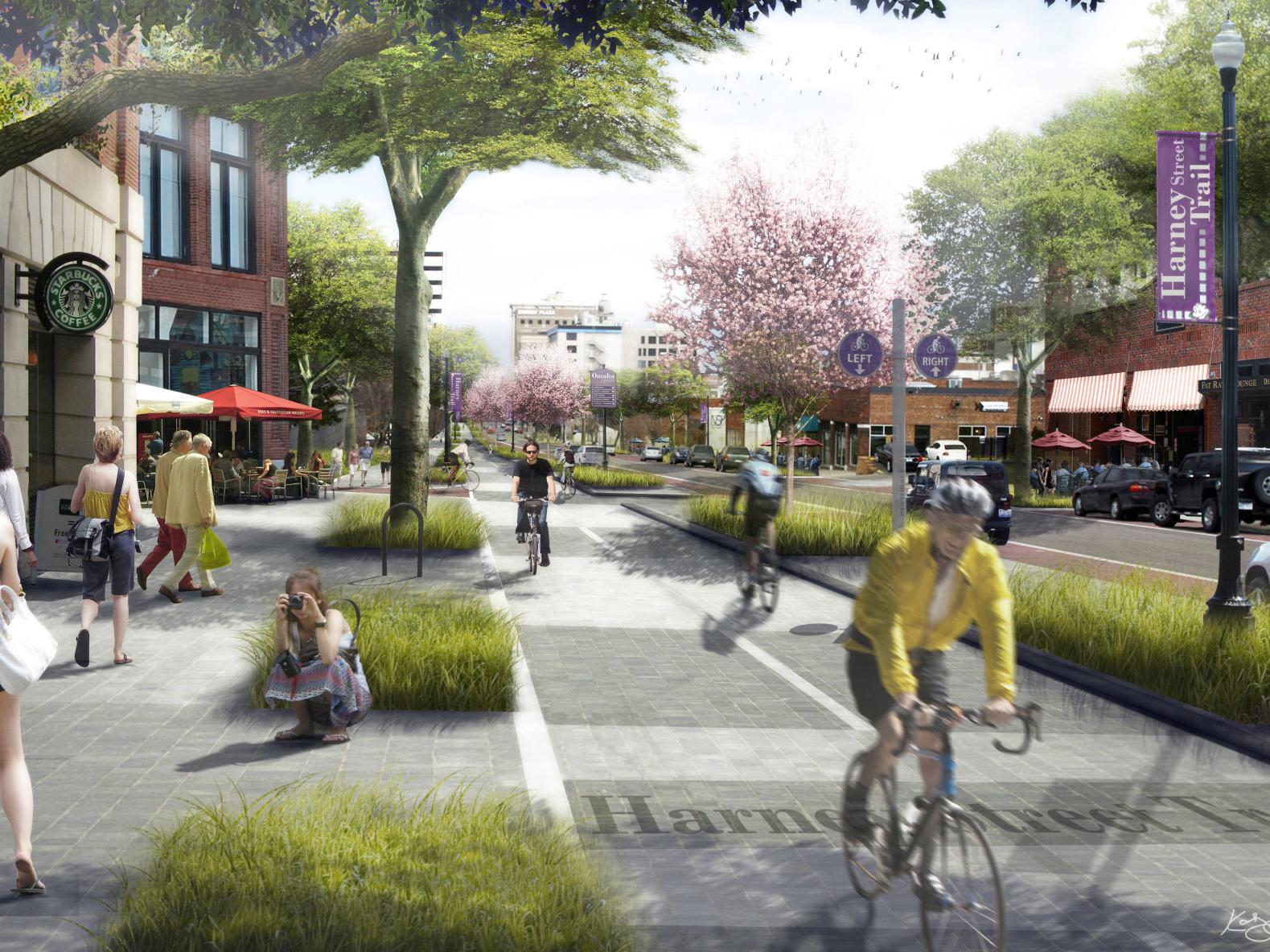
Three amendments to the next capital improvement program were also approved. One will go toward streetscape improvements along North Saddle Creek Road. Another would provide a permanent source of money for a protected bike lane along Harney Street. Another earmarks money for a forthcoming master plan on bicycle and pedestrian access in the city.
Well, they were all vetoed by the mayor.ita wrote: Wed Aug 18, 2021 2:00 pm In tug-of-war over Omaha city budget, small business program beats out eviction assistance
Reece Ristau
Three amendments to the next capital improvement program were also approved. One will go toward streetscape improvements along North Saddle Creek Road. Another would provide a permanent source of money for a protected bike lane along Harney Street. Another earmarks money for a forthcoming master plan on bicycle and pedestrian access in the city.
D@mn. Every day I’m eating my words when I told myself “she’s not that bad” the last year. And every day I wish the dems would have put up a serious fight to her re-election this year.ita wrote: Thu Aug 19, 2021 8:06 pmWell, they were all vetoed by the mayor.ita wrote: Wed Aug 18, 2021 2:00 pm In tug-of-war over Omaha city budget, small business program beats out eviction assistance
Reece Ristau
Three amendments to the next capital improvement program were also approved. One will go toward streetscape improvements along North Saddle Creek Road. Another would provide a permanent source of money for a protected bike lane along Harney Street. Another earmarks money for a forthcoming master plan on bicycle and pedestrian access in the city.
Mayor Stothert vetoes three amendments to city's capital improvement plan

She literally had local city law changed to prevent bike corrals from being installed is how deep the vendetta goesDundeemaha wrote: Sun Aug 22, 2021 2:44 pm This "trial" has been "in the works" for 10 years. There was money in the CIP for making it permanent in prior years that the city redirected elsewhere. Putting the money in the CIP doesn't immediately get it built, it just prepares to do it.
Also this is the exact kind of "public private partnership" that the city usually swoons over with 2.5 million of the 3 million dollar cost coming from the private sector.
The out of character zeal with which Stothert's admin has fought bicycle infrastructure makes it seem like she's got a personal vendetta against the Omaha bicycle advocacy community.
Seriously? What are the restrictions she put for them?Jins123 wrote: Sun Aug 22, 2021 3:09 pmShe literally had local city law changed to prevent bike corrals from being installed is how deep the vendetta goesDundeemaha wrote: Sun Aug 22, 2021 2:44 pm This "trial" has been "in the works" for 10 years. There was money in the CIP for making it permanent in prior years that the city redirected elsewhere. Putting the money in the CIP doesn't immediately get it built, it just prepares to do it.
Also this is the exact kind of "public private partnership" that the city usually swoons over with 2.5 million of the 3 million dollar cost coming from the private sector.
The out of character zeal with which Stothert's admin has fought bicycle infrastructure makes it seem like she's got a personal vendetta against the Omaha bicycle advocacy community.
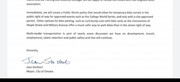
God forbid someone takes a step in the right direction under their own volition.Jins123 wrote: Sun Aug 22, 2021 4:54 pm This was a email sent out in response to the Benson bike corral situation. A new policy (not against the law to clarify) about future bike corrals in the city. A independent business can’t just install one, like the former Bicycle Co. shop had done.
To add to this train of thought, regarding the funds Festersen's amendment would add to the CIP for the Pedestrian and Bike Master Plan, the Mayor explained that since the master plan has not been completed, we don't know if the plan will include recommendations for capital improvements. The way I interpret that is that she is insinuating that once the Pedestrian and Bike Master Plan is completed, there is a chance that there could be no capital improvements recommended under the Plan, let alone capital improvements of at least $1.25 million. It just doesn't sit well with me when CIP monies are moved around constantly. The fact that there is even insinuation that the master plan results in no capital improvements points to the administration's priorities and reluctance against active commuting infrastructure. This is the story of Omaha, despite what's happening in the urban core, and will continue to be the case unless there is immense pressure from the people or business community.Dundeemaha wrote: Sun Aug 22, 2021 2:44 pm This "trial" has been "in the works" for 10 years. There was money in the CIP for making it permanent in prior years that the city redirected elsewhere. Putting the money in the CIP doesn't immediately get it built, it just prepares to do it.
Also this is the exact kind of "public private partnership" that the city usually swoons over with 2.5 million of the 3 million dollar cost coming from the private sector.
The out of character zeal with which Stothert's admin has fought bicycle infrastructure makes it seem like she's got a personal vendetta against the Omaha bicycle advocacy community.
Reece Ristau
The Omaha City Council didn’t have the votes Tuesday to override Mayor Jean Stothert’s vetoes of amendments to Omaha’s 2022 city budget and capital improvement plan.
Council members had attempted to add money to permanently fund a protected bike lane, incorporate recommendations of a future bicycle/pedestrian master plan, make improvements to a section of North Saddle Creek Road and create a website for Councilwoman Juanita Johnson.
Stothert last week vetoed those proposals, broadly arguing that they were being prematurely funded or were not needed.

S.O.Boy wrote: Wed Aug 25, 2021 10:22 pm Permanently closed
Olympia Cycle
1324 N 40th St, Omaha, NE 68131
Early numbers indicate that the 'build it and they will come' applies to bike infrastructure. Will detractors say a +100% increase in bicycling along this route is not enough to justify the potential cost of making it permanent? I know it's still early in the pilot, but the results should not be surprising to people who can actually make decisions about the future of this bikeway, and others, in the City.Katherine Wiley
Bike Walk Nebraska has released new numbers from a survey about the Market-to-Midtown Bikeway.
The organization says bicycling has increased 132% since the bike lanes opened in July.
93% of riders surveyed agreed the protective barriers add to their feeling of safety. And 96% agreed they bike for transportation more when bike lanes are physically separated from car traffic.
Between July and October, the organization reports 865 bike share trips were made from a B-Cycle station along the corridor.
Six weeks after the lanes opened, the executive director of Bike Walk Nebraska told 6 News ridership had far exceeded their expectations, with an average of 140 riders on weekdays and well over 200 on weekends.
In total, the bike lanes costs $250,000 and are funded by Metro Smart Cities. The organization seeks to create solutions to transportation challenges and accessibility in Omaha.
The protected lanes are a pilot project that will conclude in September 2022.

Bike infrastructure is definitely a 'build it and they will come' deal, particularly if it is low-stress to the rider. I work in the bike planning department of my company and what we've found is that there's strong demand for cycling in most communities, large and small, but many people don't feel comfortable riding on infrastructure that appears unsafe. A bike lane on a 55 MPH highway (see: Florida) will hardly ever be used by anyone but the most fearless, Licra wearing cyclists. But infrastructure treatments like the Harney Street Bike Way that have a buffer from automobile traffic are much more comfortable and safe to ride on and appeal to riders of a wider range of ages and abilities. If you build out a network of those in strategic locations with plentiful numbers of origin and destination points (that have adequate bike parking and are easily accessible by cyclists), you'll see strong increases in cycling as a regular mode of transport.ita wrote: Fri Nov 12, 2021 4:37 pm New Market-to-Midway Bikeway survey numbers released
Early numbers indicate that the 'build it and they will come' applies to bike infrastructure. Will detractors say a +100% increase in bicycling along this route is not enough to justify the potential cost of making it permanent? I know it's still early in the pilot, but the results should not be surprising to people who can actually make decisions about the future of this bikeway, and others, in the City.Katherine Wiley
Bike Walk Nebraska has released new numbers from a survey about the Market-to-Midtown Bikeway.
The organization says bicycling has increased 132% since the bike lanes opened in July.
93% of riders surveyed agreed the protective barriers add to their feeling of safety. And 96% agreed they bike for transportation more when bike lanes are physically separated from car traffic.
Between July and October, the organization reports 865 bike share trips were made from a B-Cycle station along the corridor.
Six weeks after the lanes opened, the executive director of Bike Walk Nebraska told 6 News ridership had far exceeded their expectations, with an average of 140 riders on weekdays and well over 200 on weekends.
In total, the bike lanes costs $250,000 and are funded by Metro Smart Cities. The organization seeks to create solutions to transportation challenges and accessibility in Omaha.
The protected lanes are a pilot project that will conclude in September 2022.
No argument here, I am with you on all those points. I hope this leads to additional bike infrastructure, as I think, the Market to Midtown bikeway should be all but secure in being permanent. What other potential routes should be priority routes?TitosBuritoBarn wrote: Fri Nov 12, 2021 5:38 pmBike infrastructure is definitely a 'build it and they will come' deal, particularly if it is low-stress to the rider. I work in the bike planning department of my company and what we've found is that there's strong demand for cycling in most communities, large and small, but many people don't feel comfortable riding on infrastructure that appears unsafe. A bike lane on a 55 MPH highway (see: Florida) will hardly ever be used by anyone but the most fearless, Licra wearing cyclists. But infrastructure treatments like the Harney Street Bike Way that have a buffer from automobile traffic are much more comfortable and safe to ride on and appeal to riders of a wider range of ages and abilities. If you build out a network of those in strategic locations with plentiful numbers of origin and destination points (that have adequate bike parking and are easily accessible by cyclists), you'll see strong increases in cycling as a regular mode of transport.ita wrote: Fri Nov 12, 2021 4:37 pm New Market-to-Midway Bikeway survey numbers released
Early numbers indicate that the 'build it and they will come' applies to bike infrastructure. Will detractors say a +100% increase in bicycling along this route is not enough to justify the potential cost of making it permanent? I know it's still early in the pilot, but the results should not be surprising to people who can actually make decisions about the future of this bikeway, and others, in the City.Katherine Wiley
Bike Walk Nebraska has released new numbers from a survey about the Market-to-Midtown Bikeway.
The organization says bicycling has increased 132% since the bike lanes opened in July.
93% of riders surveyed agreed the protective barriers add to their feeling of safety. And 96% agreed they bike for transportation more when bike lanes are physically separated from car traffic.
Between July and October, the organization reports 865 bike share trips were made from a B-Cycle station along the corridor.
Six weeks after the lanes opened, the executive director of Bike Walk Nebraska told 6 News ridership had far exceeded their expectations, with an average of 140 riders on weekdays and well over 200 on weekends.
In total, the bike lanes costs $250,000 and are funded by Metro Smart Cities. The organization seeks to create solutions to transportation challenges and accessibility in Omaha.
The protected lanes are a pilot project that will conclude in September 2022.
I'd love to get a greenway, or at least protected lanes to Dundee, Blackstone, and Aksarben for starters. Once in AK you can take the existing trails South the Bellevue pretty easily.ita wrote: Fri Nov 12, 2021 5:49 pmNo argument here, I am with you on all those points. I hope this leads to additional bike infrastructure, as I think, the Market to Midtown bikeway should be all but secure in being permanent. What other potential routes should be priority routes?TitosBuritoBarn wrote: Fri Nov 12, 2021 5:38 pmBike infrastructure is definitely a 'build it and they will come' deal, particularly if it is low-stress to the rider. I work in the bike planning department of my company and what we've found is that there's strong demand for cycling in most communities, large and small, but many people don't feel comfortable riding on infrastructure that appears unsafe. A bike lane on a 55 MPH highway (see: Florida) will hardly ever be used by anyone but the most fearless, Licra wearing cyclists. But infrastructure treatments like the Harney Street Bike Way that have a buffer from automobile traffic are much more comfortable and safe to ride on and appeal to riders of a wider range of ages and abilities. If you build out a network of those in strategic locations with plentiful numbers of origin and destination points (that have adequate bike parking and are easily accessible by cyclists), you'll see strong increases in cycling as a regular mode of transport.ita wrote: Fri Nov 12, 2021 4:37 pm New Market-to-Midway Bikeway survey numbers released
Early numbers indicate that the 'build it and they will come' applies to bike infrastructure. Will detractors say a +100% increase in bicycling along this route is not enough to justify the potential cost of making it permanent? I know it's still early in the pilot, but the results should not be surprising to people who can actually make decisions about the future of this bikeway, and others, in the City.Katherine Wiley
Bike Walk Nebraska has released new numbers from a survey about the Market-to-Midtown Bikeway.
The organization says bicycling has increased 132% since the bike lanes opened in July.
93% of riders surveyed agreed the protective barriers add to their feeling of safety. And 96% agreed they bike for transportation more when bike lanes are physically separated from car traffic.
Between July and October, the organization reports 865 bike share trips were made from a B-Cycle station along the corridor.
Six weeks after the lanes opened, the executive director of Bike Walk Nebraska told 6 News ridership had far exceeded their expectations, with an average of 140 riders on weekdays and well over 200 on weekends.
In total, the bike lanes costs $250,000 and are funded by Metro Smart Cities. The organization seeks to create solutions to transportation challenges and accessibility in Omaha.
The protected lanes are a pilot project that will conclude in September 2022.
– Derek Babb, Board Member and Bike Team Lead
Last week, I rode the Harney Street Cycle Track to see how well it was plowed after our recent snow storm. The previous day, I had seen Dear Evan Hansen at the Orpheum and there were several people parked in the bike lane, waiting to pick someone up. I loudly commented that you shouldn't park there and my wife said, "He's obviously waiting for someone." I responded that there is no reason to be parked in the bike lane, even if it's cold, even if you'll only be a minute.
All that background to say, we have so little here in Omaha that I feel like we constantly need to fight to maintain what we have, we constantly need to prove that we deserve the few painted bicycle gutters and the one pilot project protected bike lane we have.
Back to the snow.
I went to as many public meetings as I could in the lead-up to the protected bike lane. I was there nearly 10 years ago when this lane was first proposed. I was there when we re-started the conversation. At every one of these public meetings, someone would ask, "What about when it snows?" The frustrating thing about that question is that it's so lazy. Omaha is snowy for a few weeks out of the year. We have a baseball stadium that is only used for two weeks a year but I guess that is not the same.
...
The thing that I keep thinking is, we are learning the wrong lessons. We know that people are going to use snow clearing issues as a blunt instrument to prevent future bike infrastructure. The goal needs to be a fully cleared bike lane as quickly (or ideally quicker) than the car lanes are cleared. We can't afford to do a bad job and learn from that. We need to do an immaculate job and learn where we can be more efficient in the future.
Advocating in Omaha is exhausting. We have to fight to maintain what we have and it feels like actual permanent improvements are impossible. It's been a long few years and I am tired. When do you stop shouting for basic infrastructure and move to a place that gets it?
...
In the meantime, I am upset with fellow advocates because the city isn't even at the table. The city is doing nothing. The CIP is full of parking and road widening and Council Bluffs is embarrassing Omaha with their forward thinking and action on bike infrastructure. There are many lessons to be learned here, but I fear we are missing the most important ones.
I'd imagine that's in part because bicycle planning and infrastructure is so poor in Omaha right now. It's an afterthought and tacked on to infrastructure that focuses on moving cars around. I don't think there would be as much hatred if it felt more balanced.Busguy2010 wrote: Wed Jan 19, 2022 6:04 pm Hot take: Nobody likes bicyclists... I even commute and go to the grocery store fairly often with my bike when my vehicle is getting worked on, and I don't even like myself when I do it, lol.
I think about this often, but there aren't many other places in the US that would beat Omaha at my current financial budget with acceptable crime rates.When do you stop shouting for basic infrastructure and move to a place that gets it?

Regarding this, I am curious to see statistics on people moving between Des Moines, Omaha, and Kansas City. I would guess Omaha/DSM is a relatively even trade with both funneling to the KC metro. Neither Des Moines or Kansas City are great with bikes, but have been shown much more willing to change than Omaha.TransitOriented wrote: Thu Jan 20, 2022 8:04 pmI think about this often, but there aren't many other places in the US that would beat Omaha at my current financial budget with acceptable crime rates.When do you stop shouting for basic infrastructure and move to a place that gets it?
This would be great! Tear out the parking, give us a nice greenway!iamjacobm wrote: Thu Jan 27, 2022 1:24 am The streetcar is going to run in traffic so it shouldn't need extra space. I would think it would make sense to keep and improve the bikeway while the road is being torn up.
Market to Midtown Bikeway
Data from the Market-to-Midtown Bikeway show a 140% increase in bicycling and increased feelings of safety among riders during the first six months since its installation.
Yes! Now we just need more! More bikeways, more greenways, more protected lanes!ita wrote: Tue May 17, 2022 2:08 pm https://mapacog.org/wp-content/uploads/ ... g-2022.pdf
Market to Midtown Bikeway
Data from the Market-to-Midtown Bikeway show a 140% increase in bicycling and increased feelings of safety among riders during the first six months since its installation.
Report is embedded in the article. So, how long will it take to make this permanent? Likely will be rolled up into the streetcar project. Hopefully it's extended all the way to the UNMC admin building. Then it can connect with the extension of the field club trail through the UNMC campus once they build the ped/bike bridge over leavenworth.- An Omaha-based nonprofit released a report Monday one year into the Market-to-Midtown Bikeway pilot project.
From January to July 2022 Bike Walk Nebraska in partnership with Metro Smart Cities has been reviewing bike trends in the Omaha-metro, looking into scooter and bike share usage data, rider testimonials, and insights on maintenance challenges according to the release.
What stands out from Heartland Bike Share is the 69% increase in usage of the Market-to-Midtown Bikeway.
Last year, the nonprofit said that since the bike lanes opened last July, bicycling increased by 132%.


Emphasis added to show the state's non-inclusive transportation planning; it's still a highway planning department, despite the name change.Nebraska is no longer at the end of the pack as the nation’s least friendly state for bicyclists.
A new ranking by the League of American Bicyclists now places the Cornhusker State 49th out of 50 states.
Nebraska had been ranked 50th since 2017.
“We have a long way to go,” said Julie Harris, executive director of Bike Walk Nebraska.
...
Nebraska got its top grade, a “B,” for “traffic laws and practices.” Harris said the passage of a state law in 2017, which gave bicyclists the same legal protections as pedestrians when in a crosswalk, boosted that score. Safety, she said, has been an emphasis area for Bike Walk Nebraska.
The state’s worst grades were an “F+” for infrastructure and funding and an “F” for education and encouragement.
...
“We just don’t check those boxes,” Harris said, adding that her association continues to work with the Nebraska Department of Transportation to adopt road designs with bike safety in mind.
Jeni Campana, a spokeswoman for NDOT, said that while the state doesn’t have a formal state bike plan, bicyclists were considered in the new, 20-year comprehensive transportation plan completed last year.
...
Nebraska’s rating might be low, according to Harris, because the state has fewer hard-core bicyclists than do other states. Only 0.3% of the state’s commuters do so via bicycle, according to the League of American Bicyclists.
Harris said surveys show that about 60% of people would bike but are afraid due to the lack of safe routes. She said the cities of Omaha and Lincoln have good bike-hike trail systems, but they often aren’t incorporated into a complete transportation plan.
I saw that too, and tried to focus on the positive in my mind. Nebraska took a small step forward, and Omaha/ Lincoln seem to be doing even better. And at least NDOT sees some of what they need to fix.ita wrote: Thu Aug 18, 2022 4:00 pm I don't know if this warrants a new thread, but here is a short article about how Nebraska is now the second worst state for bikers:
Nebraska loses distinction as least ‘bicycle friendly’ state in the union
Emphasis added to show the state's non-inclusive transportation planning; it's still a highway planning department, despite the name change.Nebraska is no longer at the end of the pack as the nation’s least friendly state for bicyclists.
A new ranking by the League of American Bicyclists now places the Cornhusker State 49th out of 50 states.
Nebraska had been ranked 50th since 2017.
“We have a long way to go,” said Julie Harris, executive director of Bike Walk Nebraska.
...
Nebraska got its top grade, a “B,” for “traffic laws and practices.” Harris said the passage of a state law in 2017, which gave bicyclists the same legal protections as pedestrians when in a crosswalk, boosted that score. Safety, she said, has been an emphasis area for Bike Walk Nebraska.
The state’s worst grades were an “F+” for infrastructure and funding and an “F” for education and encouragement.
...
“We just don’t check those boxes,” Harris said, adding that her association continues to work with the Nebraska Department of Transportation to adopt road designs with bike safety in mind.
Jeni Campana, a spokeswoman for NDOT, said that while the state doesn’t have a formal state bike plan, bicyclists were considered in the new, 20-year comprehensive transportation plan completed last year.
...
Nebraska’s rating might be low, according to Harris, because the state has fewer hard-core bicyclists than do other states. Only 0.3% of the state’s commuters do so via bicycle, according to the League of American Bicyclists.
Harris said surveys show that about 60% of people would bike but are afraid due to the lack of safe routes. She said the cities of Omaha and Lincoln have good bike-hike trail systems, but they often aren’t incorporated into a complete transportation plan.