Urban Transit: Transportation and Development
Moderators: nebugeater, Omaha Cowboy, Brad, BRoss
-
BRoss

- IT Director
- Posts: 10003335
- Joined: Fri Aug 04, 2006 7:39 pm
- Location: West Central Omaha
Re: Urban Transit: Transportation and Development
fyi I moved this to the Bar and Grill section with a shadow topic left behind in Urban Development. But the shadow topic won't go to the top when there is a reply anymore. Just don't want this discussion to get lost.
-
Athomsfere
- Planning Board
- Posts: 2300
- Joined: Mon Sep 14, 2015 10:03 pm
Re: Urban Transit: Transportation and Development
I guess this moving was enough to kill it.
-
nebport5
- Planning Board
- Posts: 2752
- Joined: Sun Jun 06, 2004 3:13 pm
- Location: 68102
Re: Urban Transit: Transportation and Development
Granted it was all getting way off topic and it could've been split into multiple threads or added to other threads, but this thread title doesn't represent the discussion myself and some others were having.
-
BRoss
- IT Director
- Posts: 10003335
- Joined: Fri Aug 04, 2006 7:39 pm
- Location: West Central Omaha
Re: Urban Transit: Transportation and Development
I renamed to something that is hopefully more descriptive. Also bumped the shadow post.nebport5 wrote: Tue Feb 21, 2023 9:58 amGranted it was all getting way off topic and it could've been split into multiple threads or added to other threads, but this thread title doesn't represent the discussion myself and some others were having.
-
nebport5
- Planning Board
- Posts: 2752
- Joined: Sun Jun 06, 2004 3:13 pm
- Location: 68102
Re: Urban Transit: Transportation and Development
Thanks. I realize and appreciate how tedious it must be moving threads around. It's very easy to get off topic and mostly you guys let it go if it doesn't go too far.BRoss wrote: Tue Feb 21, 2023 11:02 amI renamed to something that is hopefully more descriptive. Also bumped the shadow post.nebport5 wrote: Tue Feb 21, 2023 9:58 amGranted it was all getting way off topic and it could've been split into multiple threads or added to other threads, but this thread title doesn't represent the discussion myself and some others were having.
-
Dusty
- Human Relations
- Posts: 778
- Joined: Wed May 25, 2011 10:53 pm
- Location: Central Florida
Re: Urban Transit: Transportation and Development
For those of you who have never heard of Strong Towns, please check it out.
Great non-profit supporting a different viewpoint on Transportation and Urban Planning.
Lots of interesting articles, videos, and podcasts. You don't have to agree with everything but really opens up some great discussions regarding how we design and plan our city.
Omaha could greatly benefit from embracing some Strong Towns Principles.
https://www.strongtowns.org/
Common topics:
Transparency of transportation spending
Building safer streets
Attracting the right developer for projects
Changing design to improve transit
Changing design to support businesses
Building a strong and resilient city
Great non-profit supporting a different viewpoint on Transportation and Urban Planning.
Lots of interesting articles, videos, and podcasts. You don't have to agree with everything but really opens up some great discussions regarding how we design and plan our city.
Omaha could greatly benefit from embracing some Strong Towns Principles.
https://www.strongtowns.org/
Common topics:
Transparency of transportation spending
Building safer streets
Attracting the right developer for projects
Changing design to improve transit
Changing design to support businesses
Building a strong and resilient city
Omaha's Transit Future starts now. Let's make the change!
Omaha Transit Network
Omaha Transit Network
-
Athomsfere
- Planning Board
- Posts: 2300
- Joined: Mon Sep 14, 2015 10:03 pm
-
BRoss
- IT Director
- Posts: 10003335
- Joined: Fri Aug 04, 2006 7:39 pm
- Location: West Central Omaha
Re: Urban Transit: Transportation and Development
DoneAthomsfere wrote: Thu Feb 23, 2023 10:42 am I think we could just merge this to
https://eomahaforums.com/viewtopic.php?t=23696
Also, would this fit better in Transportation now? When I moved it to Bar and Grill, it was more generic.
-
Athomsfere
- Planning Board
- Posts: 2300
- Joined: Mon Sep 14, 2015 10:03 pm
Re: Urban Transit: Transportation and Development
IDK. I mean this all started with urban vs suburban, density problems, defining good transit...BRoss wrote: Thu Feb 23, 2023 11:03 amDoneAthomsfere wrote: Thu Feb 23, 2023 10:42 am I think we could just merge this to
https://eomahaforums.com/viewtopic.php?t=23696
Also, would this fit better in Transportation now? When I moved it to Bar and Grill, it was more generic.
Maybe if this become a hot thread a "Strong Towns" or "Orange Pill" or "Urban Development 101" board would make sense?
-
nebport5
- Planning Board
- Posts: 2752
- Joined: Sun Jun 06, 2004 3:13 pm
- Location: 68102
Re: Urban Transit: Transportation and Development
Athomsfere wrote: Thu Feb 23, 2023 11:10 amBRoss wrote: Thu Feb 23, 2023 11:03 amDoneAthomsfere wrote: Thu Feb 23, 2023 10:42 am I think we could just merge this to
https://eomahaforums.com/viewtopic.php?t=23696
Also, would this fit better in Transportation now? When I moved it to Bar and Grill, it was more generic.
IDK. I mean this all started with urban vs suburban, density problems, defining good transit...
Maybe if this become a hot thread a "Strong Towns" or "Orange Pill" or "Urban Development 101" board would make sense?
The topic veering to me wasn't so much about urban vs. suburban, but rather, about city wide transportation solutions. That's a much more interesting discussion to me than urban vs. suburban which ultimately comes down to personal choices which are as polarizing as politics.
-
Athomsfere
- Planning Board
- Posts: 2300
- Joined: Mon Sep 14, 2015 10:03 pm
Re: Urban Transit: Transportation and Development
There was certainly conversation around both. And I think they are both good conversations. Especially when someone starts throwing stuff like Strong Towns around.nebport5 wrote: Thu Feb 23, 2023 2:08 pm
The topic veering to me wasn't so much about urban vs. suburban, but rather, about city wide transportation solutions. That's a much more interesting discussion to me than urban vs. suburban which ultimately comes down to personal choices which are as polarizing as politics.
Because as much as I hate suburbs, it's not that they are suburbs it's that they are American suburbs. Suburbs and small towns don't have to suck. Take Eureka Springs Arkansas as an example. Or even West Farm. If we built better suburbs, it would also be a win for transit. Buy a condo / townhouse in the suburbs (West Farm) where a portion of the community could walk, bike or shuttle to work via trams or bus. Normalize not driving 2 blocks for a gallon of milk, and more people will demand transit from out west to the core to be frequent and reliable. It's just all winning when these things work together.
-
Louie
- County Board
- Posts: 4891
- Joined: Fri Dec 23, 2011 4:23 pm
- Location: Dundee
Re: Urban Transit: Transportation and Development
That's a great point, suburbs don't have to be car-centric. It's just that 99% of them in the US are.Athomsfere wrote: Thu Feb 23, 2023 4:41 pmThere was certainly conversation around both. And I think they are both good conversations. Especially when someone starts throwing stuff like Strong Towns around.nebport5 wrote: Thu Feb 23, 2023 2:08 pm
The topic veering to me wasn't so much about urban vs. suburban, but rather, about city wide transportation solutions. That's a much more interesting discussion to me than urban vs. suburban which ultimately comes down to personal choices which are as polarizing as politics.
Because as much as I hate suburbs, it's not that they are suburbs it's that they are American suburbs. Suburbs and small towns don't have to suck. Take Eureka Springs Arkansas as an example. Or even West Farm. If we built better suburbs, it would also be a win for transit. Buy a condo / townhouse in the suburbs (West Farm) where a portion of the community could walk, bike or shuttle to work via trams or bus. Normalize not driving 2 blocks for a gallon of milk, and more people will demand transit from out west to the core to be frequent and reliable. It's just all winning when these things work together.
-
Garrett

- County Board
- Posts: 4629
- Joined: Wed Nov 26, 2008 6:29 pm
- Location: New York City
Re: Urban Transit: Transportation and Development
Agreed. I love small towns and suburbs. There are tons of beautiful small towns off commuter rail lines up in the Hudson Valley that are idyllic and walkable while still being small with good access to transit. Take a streetview tour around Beacon, NY and you'll see what I mean. It's not that I want everyone to immediately abandon their cars. But to have the vast majority of our cities only accessible if you own a car is absurd. The cost of car ownership is up to $10,000 per year on average in the US. Every single trip you take should not have to need a car, and just neighborhood after neighborhood of single family homes shouldn't be the default.Athomsfere wrote: Thu Feb 23, 2023 4:41 pmThere was certainly conversation around both. And I think they are both good conversations. Especially when someone starts throwing stuff like Strong Towns around.nebport5 wrote: Thu Feb 23, 2023 2:08 pm
The topic veering to me wasn't so much about urban vs. suburban, but rather, about city wide transportation solutions. That's a much more interesting discussion to me than urban vs. suburban which ultimately comes down to personal choices which are as polarizing as politics.
Because as much as I hate suburbs, it's not that they are suburbs it's that they are American suburbs. Suburbs and small towns don't have to suck. Take Eureka Springs Arkansas as an example. Or even West Farm. If we built better suburbs, it would also be a win for transit. Buy a condo / townhouse in the suburbs (West Farm) where a portion of the community could walk, bike or shuttle to work via trams or bus. Normalize not driving 2 blocks for a gallon of milk, and more people will demand transit from out west to the core to be frequent and reliable. It's just all winning when these things work together.
OMA-->CHI-->NYC
-
Athomsfere
- Planning Board
- Posts: 2300
- Joined: Mon Sep 14, 2015 10:03 pm
Re: Urban Transit: Transportation and Development
One thing I find myself thinking about a lot. Is how does an American city bridge the gap.Garrett wrote: Thu Feb 23, 2023 5:52 pmAgreed. I love small towns and suburbs. There are tons of beautiful small towns off commuter rail lines up in the Hudson Valley that are idyllic and walkable while still being small with good access to transit. Take a streetview tour around Beacon, NY and you'll see what I mean. It's not that I want everyone to immediately abandon their cars. But to have the vast majority of our cities only accessible if you own a car is absurd. The cost of car ownership is up to $10,000 per year on average in the US. Every single trip you take should not have to need a car, and just neighborhood after neighborhood of single family homes shouldn't be the default.Athomsfere wrote: Thu Feb 23, 2023 4:41 pmThere was certainly conversation around both. And I think they are both good conversations. Especially when someone starts throwing stuff like Strong Towns around.nebport5 wrote: Thu Feb 23, 2023 2:08 pm
The topic veering to me wasn't so much about urban vs. suburban, but rather, about city wide transportation solutions. That's a much more interesting discussion to me than urban vs. suburban which ultimately comes down to personal choices which are as polarizing as politics.
Because as much as I hate suburbs, it's not that they are suburbs it's that they are American suburbs. Suburbs and small towns don't have to suck. Take Eureka Springs Arkansas as an example. Or even West Farm. If we built better suburbs, it would also be a win for transit. Buy a condo / townhouse in the suburbs (West Farm) where a portion of the community could walk, bike or shuttle to work via trams or bus. Normalize not driving 2 blocks for a gallon of milk, and more people will demand transit from out west to the core to be frequent and reliable. It's just all winning when these things work together.
Small towns and medium cities might have it the easiest. Especially those that are coming from being something like a rail road town. Put some apartments over main street, and it's a huge win.
Cities like Omaha though, how do we get the street car suburbs and lifestyle centers to interact with their communities better. Blackstone is great because you can walk from a lot of the surrounding are to Blackstone, easy. Blackstone IMO is like a 9/10.
But MTC is cut off from the north of Dodge, which I feel continuous sidewalks would help connect some of those medium density lots with the action. And also encourage some of the empty (or under utilized lots) to bring more health in. And the street car will help connect DT to MTC and Blackstone. But MTC overall just has so much underutilized space (parking lots galore).
But really, how do connect something like Crossroads to the community. And not just create another island of almost good development? Short of tearing out Dodge and doing something drastic (cut and cover, access round about). How do we make sure it's easier to walk or bike from Swivel apartments or the SE corner house at 72nd and Dodge than to drive to that target? That's where I get stuck.
-
Garrett
- County Board
- Posts: 4629
- Joined: Wed Nov 26, 2008 6:29 pm
- Location: New York City
Re: Urban Transit: Transportation and Development
Dodge itself isn't a huge hard to fix issue. The avenue I cross to get to my subway station is just as wide as Dodge is at 72nd. You could use some traffic calming measures and install a pedestrian median and solve a fair number of issues. The main problem is is that you aren't just crossing Dodge, you then also have to cross the massive parking lots of whatever place you're going to that basically scream "hey, drive to me!" You'd basically need to just start building buildings that sit on Dodge instead of sitting back from it. I think the 2008 master plan had elements of this. I think the current crossroads design continues to fail at this.Athomsfere wrote: Fri Feb 24, 2023 10:05 amOne thing I find myself thinking about a lot. Is how does an American city bridge the gap.Garrett wrote: Thu Feb 23, 2023 5:52 pmAgreed. I love small towns and suburbs. There are tons of beautiful small towns off commuter rail lines up in the Hudson Valley that are idyllic and walkable while still being small with good access to transit. Take a streetview tour around Beacon, NY and you'll see what I mean. It's not that I want everyone to immediately abandon their cars. But to have the vast majority of our cities only accessible if you own a car is absurd. The cost of car ownership is up to $10,000 per year on average in the US. Every single trip you take should not have to need a car, and just neighborhood after neighborhood of single family homes shouldn't be the default.Athomsfere wrote: Thu Feb 23, 2023 4:41 pmThere was certainly conversation around both. And I think they are both good conversations. Especially when someone starts throwing stuff like Strong Towns around.nebport5 wrote: Thu Feb 23, 2023 2:08 pm
The topic veering to me wasn't so much about urban vs. suburban, but rather, about city wide transportation solutions. That's a much more interesting discussion to me than urban vs. suburban which ultimately comes down to personal choices which are as polarizing as politics.
Because as much as I hate suburbs, it's not that they are suburbs it's that they are American suburbs. Suburbs and small towns don't have to suck. Take Eureka Springs Arkansas as an example. Or even West Farm. If we built better suburbs, it would also be a win for transit. Buy a condo / townhouse in the suburbs (West Farm) where a portion of the community could walk, bike or shuttle to work via trams or bus. Normalize not driving 2 blocks for a gallon of milk, and more people will demand transit from out west to the core to be frequent and reliable. It's just all winning when these things work together.
Small towns and medium cities might have it the easiest. Especially those that are coming from being something like a rail road town. Put some apartments over main street, and it's a huge win.
Cities like Omaha though, how do we get the street car suburbs and lifestyle centers to interact with their communities better. Blackstone is great because you can walk from a lot of the surrounding are to Blackstone, easy. Blackstone IMO is like a 9/10.
But MTC is cut off from the north of Dodge, which I feel continuous sidewalks would help connect some of those medium density lots with the action. And also encourage some of the empty (or under utilized lots) to bring more health in. And the street car will help connect DT to MTC and Blackstone. But MTC overall just has so much underutilized space (parking lots galore).
But really, how do connect something like Crossroads to the community. And not just create another island of almost good development? Short of tearing out Dodge and doing something drastic (cut and cover, access round about). How do we make sure it's easier to walk or bike from Swivel apartments or the SE corner house at 72nd and Dodge than to drive to that target? That's where I get stuck.
OMA-->CHI-->NYC
-
Louie
- County Board
- Posts: 4891
- Joined: Fri Dec 23, 2011 4:23 pm
- Location: Dundee
Re: Urban Transit: Transportation and Development
Tbh, I'd rather cross a busy intersection than wander across massive parking lots.
-
Athomsfere
- Planning Board
- Posts: 2300
- Joined: Mon Sep 14, 2015 10:03 pm
Re: Urban Transit: Transportation and Development
It all adds up. A dessert of a parking lot and super wide, uninviting streets are both miserable.
-
nativeomahan

- County Board
- Posts: 5980
- Joined: Fri Nov 12, 2004 2:46 pm
- Location: Omaha and Puerto Vallarta
Re: Urban Transit: Transportation and Development
I realize that many forum users probably don’t care about my experiences living in other cities, but for those who might…
In my younger years I collectively spent months living in Manhattan. I have spent time in Europe visiting friends, for work, and on vacation, and most of my vacations were and are to urban areas. I virtually never had a car, and relied on my feet and public transportation to get anywhere I needed or wanted to go. Here in Puerto Vallarta, where we live about 4 months per year, we walk, ride city busses and take the occasional taxi or Uber to go where we need or wish to go. It is so much more enjoyable to know that when you walk out your front door you have so much of what you need or want within a short walk or easily accessible via public transportation. We walk to grocery stores, to the mall, to any of over 50 restaurants (including 2 Dairy Queens), panaderias, patisseries, coffee houses, taco stands, cocktail lounges, sports bars, banks, laundromats, hardware stores and other shops. I average 3-4 miles of walking a day, which helps eliminate the need for a gym membership. It’s nice not to have vehicle related expenses, as those savings pay for a lot of taxi and Uber rides, with lots of money left over.
I realize that most cities in the US are built around use of the internal combustion engine, but most towns and cities elsewhere are not.
No single place is perfect, and even down here while the winter weather may be idyllic the city is growing so fast that traffic on the major roads is more and more of a problem, even in a town where the busses run every 3-5 minutes six days a week.
Omaha and many other US metropolises are waking up to the fact that since about 1950 they lost track of being user friendly to their citizens. Many cities such as Omaha are taking necessary baby steps toward redesigning themselves to having a central core or nodes of businesses, entertainment, and housing, where residents don’t need to own motor vehicles (except maybe electric scooters) to live their lives. Time will tell if the trend toward centralization will continue. I hope that it does.
In my younger years I collectively spent months living in Manhattan. I have spent time in Europe visiting friends, for work, and on vacation, and most of my vacations were and are to urban areas. I virtually never had a car, and relied on my feet and public transportation to get anywhere I needed or wanted to go. Here in Puerto Vallarta, where we live about 4 months per year, we walk, ride city busses and take the occasional taxi or Uber to go where we need or wish to go. It is so much more enjoyable to know that when you walk out your front door you have so much of what you need or want within a short walk or easily accessible via public transportation. We walk to grocery stores, to the mall, to any of over 50 restaurants (including 2 Dairy Queens), panaderias, patisseries, coffee houses, taco stands, cocktail lounges, sports bars, banks, laundromats, hardware stores and other shops. I average 3-4 miles of walking a day, which helps eliminate the need for a gym membership. It’s nice not to have vehicle related expenses, as those savings pay for a lot of taxi and Uber rides, with lots of money left over.
I realize that most cities in the US are built around use of the internal combustion engine, but most towns and cities elsewhere are not.
No single place is perfect, and even down here while the winter weather may be idyllic the city is growing so fast that traffic on the major roads is more and more of a problem, even in a town where the busses run every 3-5 minutes six days a week.
Omaha and many other US metropolises are waking up to the fact that since about 1950 they lost track of being user friendly to their citizens. Many cities such as Omaha are taking necessary baby steps toward redesigning themselves to having a central core or nodes of businesses, entertainment, and housing, where residents don’t need to own motor vehicles (except maybe electric scooters) to live their lives. Time will tell if the trend toward centralization will continue. I hope that it does.
-
ricko
- Parks & Recreation
- Posts: 1445
- Joined: Mon Dec 11, 2006 9:54 pm
Re: Urban Transit: Transportation and Development
I couldn’t have said it better myself. I grew up in one of those pre-1950 neighborhoods in South Omaha, and what you said rings true. The way we built our cities after 1950 is a disaster on so many levels.nativeomahan wrote: Sun Feb 26, 2023 2:05 pm I realize that many forum users probably don’t care about my experiences living in other cities, but for those who might…
In my younger years I collectively spent months living in Manhattan. I have spent time in Europe visiting friends, for work, and on vacation, and most of my vacations were and are to urban areas. I virtually never had a car, and relied on my feet and public transportation to get anywhere I needed or wanted to go. Here in Puerto Vallarta, where we live about 4 months per year, we walk, ride city busses and take the occasional taxi or Uber to go where we need or wish to go. It is so much more enjoyable to know that when you walk out your front door you have so much of what you need or want within a short walk or easily accessible via public transportation. We walk to grocery stores, to the mall, to any of over 50 restaurants (including 2 Dairy Queens), panaderias, patisseries, coffee houses, taco stands, cocktail lounges, sports bars, banks, laundromats, hardware stores and other shops. I average 3-4 miles of walking a day, which helps eliminate the need for a gym membership. It’s nice not to have vehicle related expenses, as those savings pay for a lot of taxi and Uber rides, with lots of money left over.
I realize that most cities in the US are built around use of the internal combustion engine, but most towns and cities elsewhere are not.
No single place is perfect, and even down here while the winter weather may be idyllic the city is growing so fast that traffic on the major roads is more and more of a problem, even in a town where the busses run every 3-5 minutes six days a week.
Omaha and many other US metropolises are waking up to the fact that since about 1950 they lost track of being user friendly to their citizens. Many cities such as Omaha are taking necessary baby steps toward redesigning themselves to having a central core or nodes of businesses, entertainment, and housing, where residents don’t need to own motor vehicles (except maybe electric scooters) to live their lives. Time will tell if the trend toward centralization will continue. I hope that it does.
-
ricko
- Parks & Recreation
- Posts: 1445
- Joined: Mon Dec 11, 2006 9:54 pm
Re: Urban Transit: Transportation and Development
Just to illustrate my previous post——
I grew up near the Q St. commercial strip in the 50’s thru the70’s. Businesses between 36th and 42nd included a Hinky Dinky, 2 family owned grocery stores/butchers, 2 drug stores/pharmacies, a bank, diner, Italian restaurant, laundromat, 2 barber shops, 2 hair salons, 2 dairy/ice cream stores, a cobbler, an appliance store, bakery, at least 2 dental offices, a doctors office, tailor shop, 2 gas stations that also did repairs, 2 body shops, at least 4 bars, a TV repair store, an insurance agency, a hardware store, fire station, Christie Heights playground and ball field, a shoe store(the proprietor of which was blind; a testament to the honesty of customers back then), a Lutheran Church and elementary school, a Catholic Church and elementary school, and toward the end of that era, a Richman Gordman department store. I probably forgot a few. Many of the buildings have been demolished or repurposed. It’s hard to imagine now, but this was a vibrant commercial district with its own business association. Some of the owners lived above their businesses, and many of them had rental apartments above them. My last trek down that stretch of Q St. left me disappointed. I grew up within a quarter mile of all of these places. When my folks sold their ‘59 Chevy in’66, it had 5K miles on it. There’s no reason we can’t build our neighborhoods like this down the road.
I grew up near the Q St. commercial strip in the 50’s thru the70’s. Businesses between 36th and 42nd included a Hinky Dinky, 2 family owned grocery stores/butchers, 2 drug stores/pharmacies, a bank, diner, Italian restaurant, laundromat, 2 barber shops, 2 hair salons, 2 dairy/ice cream stores, a cobbler, an appliance store, bakery, at least 2 dental offices, a doctors office, tailor shop, 2 gas stations that also did repairs, 2 body shops, at least 4 bars, a TV repair store, an insurance agency, a hardware store, fire station, Christie Heights playground and ball field, a shoe store(the proprietor of which was blind; a testament to the honesty of customers back then), a Lutheran Church and elementary school, a Catholic Church and elementary school, and toward the end of that era, a Richman Gordman department store. I probably forgot a few. Many of the buildings have been demolished or repurposed. It’s hard to imagine now, but this was a vibrant commercial district with its own business association. Some of the owners lived above their businesses, and many of them had rental apartments above them. My last trek down that stretch of Q St. left me disappointed. I grew up within a quarter mile of all of these places. When my folks sold their ‘59 Chevy in’66, it had 5K miles on it. There’s no reason we can’t build our neighborhoods like this down the road.
-
Louie
- County Board
- Posts: 4891
- Joined: Fri Dec 23, 2011 4:23 pm
- Location: Dundee
Re: Urban Transit: Transportation and Development
That sounds so freaking ideal.ricko wrote: Mon Feb 27, 2023 1:17 pm Just to illustrate my previous post——
I grew up near the Q St. commercial strip in the 50’s thru the70’s. Businesses between 36th and 42nd included a Hinky Dinky, 2 family owned grocery stores/butchers, 2 drug stores/pharmacies, a bank, diner, Italian restaurant, laundromat, 2 barber shops, 2 hair salons, 2 dairy/ice cream stores, a cobbler, an appliance store, bakery, at least 2 dental offices, a doctors office, tailor shop, 2 gas stations that also did repairs, 2 body shops, at least 4 bars, a TV repair store, an insurance agency, a hardware store, fire station, Christie Heights playground and ball field, a shoe store(the proprietor of which was blind; a testament to the honesty of customers back then), a Lutheran Church and elementary school, a Catholic Church and elementary school, and toward the end of that era, a Richman Gordman department store. I probably forgot a few. Many of the buildings have been demolished or repurposed. It’s hard to imagine now, but this was a vibrant commercial district with its own business association. Some of the owners lived above their businesses, and many of them had rental apartments above them. My last trek down that stretch of Q St. left me disappointed. I grew up within a quarter mile of all of these places. When my folks sold their ‘59 Chevy in’66, it had 5K miles on it. There’s no reason we can’t build our neighborhoods like this down the road.
-
ita
- County Board
- Posts: 4735
- Joined: Thu Jul 12, 2018 4:11 pm
Re: Urban Transit: Transportation and Development
I have actually been down in that area a few times the last few years. Needed some cheap appliances and picked some up from A-1 Appliances. Discovered that small Hispanic grocery store and panaderia across the street and have bought goodies from there a few times now. Anyway, there are lots of strips like that in old Omaha that are still economically viable and vibrant. Some, like that strip, have seen better times and could use a face lift and reinvestment.ricko wrote: Mon Feb 27, 2023 1:17 pm Just to illustrate my previous post——
I grew up near the Q St. commercial strip in the 50’s thru the70’s. Businesses between 36th and 42nd included a Hinky Dinky, 2 family owned grocery stores/butchers, 2 drug stores/pharmacies, a bank, diner, Italian restaurant, laundromat, 2 barber shops, 2 hair salons, 2 dairy/ice cream stores, a cobbler, an appliance store, bakery, at least 2 dental offices, a doctors office, tailor shop, 2 gas stations that also did repairs, 2 body shops, at least 4 bars, a TV repair store, an insurance agency, a hardware store, fire station, Christie Heights playground and ball field, a shoe store(the proprietor of which was blind; a testament to the honesty of customers back then), a Lutheran Church and elementary school, a Catholic Church and elementary school, and toward the end of that era, a Richman Gordman department store. I probably forgot a few. Many of the buildings have been demolished or repurposed. It’s hard to imagine now, but this was a vibrant commercial district with its own business association. Some of the owners lived above their businesses, and many of them had rental apartments above them. My last trek down that stretch of Q St. left me disappointed. I grew up within a quarter mile of all of these places. When my folks sold their ‘59 Chevy in’66, it had 5K miles on it. There’s no reason we can’t build our neighborhoods like this down the road.
You say there is no reason to build walkable neighborhoods, but there are lots of reasons why we don't. Cars, culture, lack of transit investment, existing infrastructure, disinterest from developers, no political will, the list goes on. Omaha has several major suburban develops that could try to replicate more people friendly planning, but all we've seen is more of the same. West Farms, Avenue One, Tower District, City Centre, Crossroads. All kind of the same-ish type of planning, kind of wanting pedestrian friendly design, but not willing to go all in. No easy solutions to be sure, but there is a better way to build a city than what we've been doing for the last 60 some odd years.
-
ricko
- Parks & Recreation
- Posts: 1445
- Joined: Mon Dec 11, 2006 9:54 pm
Re: Urban Transit: Transportation and Development
Thanks for your post. I decided to take a google street view tour of that stretch of Q St.. There are quite a few businesses still there, which was good to discover. It just lacks the variety of businesses and services that existed back then.
-
Dusty
- Human Relations
- Posts: 778
- Joined: Wed May 25, 2011 10:53 pm
- Location: Central Florida
Re: Official: Omaha Streetcar Discussion
I think this group is an unusual subset of people: urban planners, transportation geeks, people who work closely with city officials. It makes this site interesting to interact. But outside this bubble lies the average citizen. They do not get informed or educated on what's going on. All they have is the local news or hearsay from someone that heard about it. A large percentage of citizens disapprove because they are misinformed. When you hear on the news "Mutal of Omaha plans to build a new skyscraper and streetcar along Farnam Street" This is misleading by running 2 separate projects as if they are one combo deal.
Just because someone disapproves that doesn't mean it's a waste of time. It just means your strategy is not working. We just need work on transportation transparency. People are still in the mindset that car infrastructure is free and transit and bikes lanes are additional expense out of their pocket. This is not true at all. Too many mindsets of "I will never use, so I don't support" We are a community. We need to support projects that bring the city value and great investment even if that means you will never attend or use.
I agree the Noddle Group does a fantastic job. I'm confident they will do a great job with a streetcar project.
Just because someone disapproves that doesn't mean it's a waste of time. It just means your strategy is not working. We just need work on transportation transparency. People are still in the mindset that car infrastructure is free and transit and bikes lanes are additional expense out of their pocket. This is not true at all. Too many mindsets of "I will never use, so I don't support" We are a community. We need to support projects that bring the city value and great investment even if that means you will never attend or use.
I agree the Noddle Group does a fantastic job. I'm confident they will do a great job with a streetcar project.
Last edited by Dusty on Mon Apr 17, 2023 8:41 am, edited 1 time in total.
Omaha's Transit Future starts now. Let's make the change!
Omaha Transit Network
Omaha Transit Network
-
Athomsfere
- Planning Board
- Posts: 2300
- Joined: Mon Sep 14, 2015 10:03 pm
Re: Official: Omaha Streetcar Discussion
Dusty wrote: Mon Apr 17, 2023 7:07 am I think this group is an unusual subset of people: urban planners, transportation geeks, people who work closely with city officials. It makes this site interesting to interact. But outside this bubble lies the average citizen. They do not get informed or educated on what's going on. All they have is the local news or here say from someone that heard about it. A large percentage of citizens disapprove because they are misinformed. When you here on the news "Mutal of Omaha plans to build a new skyscraper and streetcar along Farnam Street" This is misleading by running 2 separate projects as if they are one combo deal.
Just because someone disapproves that doesn't mean it's a waste of time. It just means your strategy is not working. We just need work on transportation transparency. People are still in the mindset that car infrastructure is free and transit and bikes lanes are additional expense out of their pocket. This is not true at all. Too many mindsets of "I will never use, so I don't support" We are a community. We need to support projects that bring the city value and great investment even if that means you will never attend or use.
I agree the Noddle Group does a fantastic job. I'm confident they will do a great job with a streetcar project.
I don't know what you have against the word "hear"... But it would be hearsay assuming you meant the legal term for something said outside of court. And obviously you "hear something" from the news.
/joking because I found the minor and same basic grammatical error whimsical.
On the whole though, I agree with the general sentiment. Most people are ignorant, often willingly so of anything not directly in their day to day life.
I think there are some grander issues to solve. Like how to we get back to trusting the experts, science, and philosophy over knee-jerk reactions and politicians?
Apparently the far-right for example has found out about 15 minute cities and are weaponizing the term to be some globalist-Marxist plot. As soon as these things become political, it seems the conversation is dead. How do you educate demographic that thinks bike lanes and friend Germany are one and the same?
A conversation about the nuance between Marxism, Communism, Authoritarianism, nationalism and fascism isn't going to get you anywhere.
And in my experience, talking about better infrastructure than car lanes and parking lots is the same. "I need to drive, because everyone drives. Everyone should drive because I have to drive. And not everyone wants to live in a glass box in the sky, ya know".
-
Big E

- City Council
- Posts: 8170
- Joined: Thu Jan 27, 2005 11:12 am
Re: Official: Omaha Streetcar Discussion
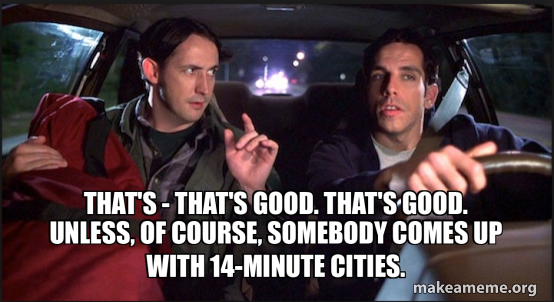
Yeah, "15 minute cities" are the Agenda 21 du jour for the wingnuts.Athomsfere wrote: Mon Apr 17, 2023 8:08 amApparently the far-right for example has found out about 15 minute cities and are weaponizing the term to be some globalist-Marxist plot.
Stable genius.
-
riceweb
- Human Relations
- Posts: 606
- Joined: Thu Mar 22, 2007 12:54 am
- Location: Omaha, NE
Re: Official: Omaha Streetcar Discussion
It's just suburban NIMBYism in response to increasing urbanization far from city centers.
In many metros across the US, you can now find boxy mid-rise apartments popping up in Transit Oriented Districts, served by Bus Rapid Transit, even in the outer ring suburbs. Historically, these types of projects ignored the suburbs because of a lack of demand, but housing patterns have shifted in the last decade. Interestingly, even in suburbs there's a case of the "missing middle", because there's not enough land available, so these areas quickly transition from very low density to mid-rises popping up all over. Probably seems sudden to many folks.
In many metros across the US, you can now find boxy mid-rise apartments popping up in Transit Oriented Districts, served by Bus Rapid Transit, even in the outer ring suburbs. Historically, these types of projects ignored the suburbs because of a lack of demand, but housing patterns have shifted in the last decade. Interestingly, even in suburbs there's a case of the "missing middle", because there's not enough land available, so these areas quickly transition from very low density to mid-rises popping up all over. Probably seems sudden to many folks.
-
almighty_tuna
- City Council
- Posts: 106348
- Joined: Tue Apr 13, 2004 1:34 pm
- Location: Somewhere between downtown and Colorado
Re: Official: Omaha Streetcar Discussion
Big E wrote: Mon Apr 17, 2023 8:27 amYeah, "15 minute cities" are the Agenda 21 du jour for the wingnuts.Athomsfere wrote: Mon Apr 17, 2023 8:08 amApparently the far-right for example has found out about 15 minute cities and are weaponizing the term to be some globalist-Marxist plot.
-
Athomsfere
- Planning Board
- Posts: 2300
- Joined: Mon Sep 14, 2015 10:03 pm
Re: Urban Transit: Transportation and Development
Totally responded out of where this started: viewtopic.php?p=370207#p370207riceweb wrote: Mon Apr 17, 2023 9:23 am It's just suburban NIMBYism in response to increasing urbanization far from city centers.
In many metros across the US, you can now find boxy mid-rise apartments popping up in Transit Oriented Districts, served by Bus Rapid Transit, even in the outer ring suburbs. Historically, these types of projects ignored the suburbs because of a lack of demand, but housing patterns have shifted in the last decade. Interestingly, even in suburbs there's a case of the "missing middle", because there's not enough land available, so these areas quickly transition from very low density to mid-rises popping up all over. Probably seems sudden to many folks.
But I we still aren't really building anything for the missing middle, sadly. Although the ADU changes were a good start. Even small developments are like 30 -50 units, not 2-10. 5 over 1 isn't bad by any stretch IMO. Just we have a ways to go if we want to see diverse areas make a comeback with "third places", a homes for everyone.
-
ita
- County Board
- Posts: 4735
- Joined: Thu Jul 12, 2018 4:11 pm
Re: Urban Transit: Transportation and Development
There are some missing middle since the zoning changes. Noddle has their townhomes developments at Aksarben, Blackstone and Leavenworth Corridor. If you follow the next phases of the 75 North/Spencer Homes project, they are also incorporating missing middle typologies. I think Canopy South will have similar sized housing. So, currently, either high priced or part of an affordable housing project.Athomsfere wrote: Mon Apr 17, 2023 10:17 amTotally responded out of where this started: viewtopic.php?p=370207#p370207riceweb wrote: Mon Apr 17, 2023 9:23 am It's just suburban NIMBYism in response to increasing urbanization far from city centers.
In many metros across the US, you can now find boxy mid-rise apartments popping up in Transit Oriented Districts, served by Bus Rapid Transit, even in the outer ring suburbs. Historically, these types of projects ignored the suburbs because of a lack of demand, but housing patterns have shifted in the last decade. Interestingly, even in suburbs there's a case of the "missing middle", because there's not enough land available, so these areas quickly transition from very low density to mid-rises popping up all over. Probably seems sudden to many folks.
But I we still aren't really building anything for the missing middle, sadly. Although the ADU changes were a good start. Even small developments are like 30 -50 units, not 2-10. 5 over 1 isn't bad by any stretch IMO. Just we have a ways to go if we want to see diverse areas make a comeback with "third places", a homes for everyone.
There have been a couple other smaller infill projects outside of those including restoring old work/live buildings, but they are very few and far between.
-
Athomsfere
- Planning Board
- Posts: 2300
- Joined: Mon Sep 14, 2015 10:03 pm
Re: Urban Transit: Transportation and Development
Absolutely. I intentionally glossed over those for a couple reasons: a) The exceptions didn't feel on topic at the moment. b) I'm not sure what the golden ratio for missing middle housing is, or if there is a minimum / maximum even for what makes sense for a city.ita wrote: Mon Apr 17, 2023 10:49 am
There are some missing middle since the zoning changes. Noddle has their townhomes developments at Aksarben, Blackstone and Leavenworth Corridor. If you follow the next phases of the 75 North/Spencer Homes project, they are also incorporating missing middle typologies. I think Canopy South will have similar sized housing. So, currently, either high priced or part of an affordable housing project.
There have been a couple other smaller infill projects outside of those including restoring old work/live buildings, but they are very few and far between.
My gut says, whatever that magic number is, we are way below target though.
-
ita
- County Board
- Posts: 4735
- Joined: Thu Jul 12, 2018 4:11 pm
Re: Urban Transit: Transportation and Development
Gotcha. We definitely do not see one off developments of duplexes-20 unit buildings. Even missing middle types are part of much bigger developments. Honestly, there might not be space for those type of developers currently. You need expertise and capital to get even a modest duplex done. In any case, I hope that we see those type of developments with further transit investment, particularly in North Omaha. North 24th and surrounding streets from Cuming to Storz have so much potential for those types of residential units.Athomsfere wrote: Mon Apr 17, 2023 11:14 amAbsolutely. I intentionally glossed over those for a couple reasons: a) The exceptions didn't feel on topic at the moment. b) I'm not sure what the golden ratio for missing middle housing is, or if there is a minimum / maximum even for what makes sense for a city.ita wrote: Mon Apr 17, 2023 10:49 am
There are some missing middle since the zoning changes. Noddle has their townhomes developments at Aksarben, Blackstone and Leavenworth Corridor. If you follow the next phases of the 75 North/Spencer Homes project, they are also incorporating missing middle typologies. I think Canopy South will have similar sized housing. So, currently, either high priced or part of an affordable housing project.
There have been a couple other smaller infill projects outside of those including restoring old work/live buildings, but they are very few and far between.
My gut says, whatever that magic number is, we are way below target though.
-
Athomsfere
- Planning Board
- Posts: 2300
- Joined: Mon Sep 14, 2015 10:03 pm
Re: Urban Transit: Transportation and Development
Well, if we want to start a GoFundAthomsfere fund, I see maybe 3 prime lots right here:ita wrote: Mon Apr 17, 2023 12:34 pmGotcha. We definitely do not see one off developments of duplexes-20 unit buildings. Even missing middle types are part of much bigger developments. Honestly, there might not be space for those type of developers currently. You need expertise and capital to get even a modest duplex done. In any case, I hope that we see those type of developments with further transit investment, particularly in North Omaha. North 24th and surrounding streets from Cuming to Storz have so much potential for those types of residential units.Athomsfere wrote: Mon Apr 17, 2023 11:14 amAbsolutely. I intentionally glossed over those for a couple reasons: a) The exceptions didn't feel on topic at the moment. b) I'm not sure what the golden ratio for missing middle housing is, or if there is a minimum / maximum even for what makes sense for a city.ita wrote: Mon Apr 17, 2023 10:49 am
There are some missing middle since the zoning changes. Noddle has their townhomes developments at Aksarben, Blackstone and Leavenworth Corridor. If you follow the next phases of the 75 North/Spencer Homes project, they are also incorporating missing middle typologies. I think Canopy South will have similar sized housing. So, currently, either high priced or part of an affordable housing project.
There have been a couple other smaller infill projects outside of those including restoring old work/live buildings, but they are very few and far between.
My gut says, whatever that magic number is, we are way below target though.
https://www.google.com/maps/@41.2481643 ... a=!3m1!1e3
First best: Parcel 1020640000
Next best, 1020700004 and 1020700006 and then re-plat for one larger lot.
Either way, could probably get 6+ for sale units on either option

-
ita
- County Board
- Posts: 4735
- Joined: Thu Jul 12, 2018 4:11 pm
Re: Urban Transit: Transportation and Development
Haha, we should start a built by eomahaforums neighborhood. Probably be terrible with how divergent opinions are, but would be fun.Athomsfere wrote: Mon Apr 17, 2023 12:54 pmWell, if we want to start a GoFundAthomsfere fund, I see maybe 3 prime lots right here:ita wrote: Mon Apr 17, 2023 12:34 pmGotcha. We definitely do not see one off developments of duplexes-20 unit buildings. Even missing middle types are part of much bigger developments. Honestly, there might not be space for those type of developers currently. You need expertise and capital to get even a modest duplex done. In any case, I hope that we see those type of developments with further transit investment, particularly in North Omaha. North 24th and surrounding streets from Cuming to Storz have so much potential for those types of residential units.Athomsfere wrote: Mon Apr 17, 2023 11:14 amAbsolutely. I intentionally glossed over those for a couple reasons: a) The exceptions didn't feel on topic at the moment. b) I'm not sure what the golden ratio for missing middle housing is, or if there is a minimum / maximum even for what makes sense for a city.ita wrote: Mon Apr 17, 2023 10:49 am
There are some missing middle since the zoning changes. Noddle has their townhomes developments at Aksarben, Blackstone and Leavenworth Corridor. If you follow the next phases of the 75 North/Spencer Homes project, they are also incorporating missing middle typologies. I think Canopy South will have similar sized housing. So, currently, either high priced or part of an affordable housing project.
There have been a couple other smaller infill projects outside of those including restoring old work/live buildings, but they are very few and far between.
My gut says, whatever that magic number is, we are way below target though.
https://www.google.com/maps/@41.2481643 ... a=!3m1!1e3
First best: Parcel 1020640000
Next best, 1020700004 and 1020700006 and then re-plat for one larger lot.
Either way, could probably get 6+ for sale units on either option
I think those lots are being or have been built on. SFH, I think. I saw them under construction summer 2022.
-
Athomsfere
- Planning Board
- Posts: 2300
- Joined: Mon Sep 14, 2015 10:03 pm
Re: Urban Transit: Transportation and Development
I think just one, at probably 1020700002. As I'm 99% sure that one has a new house on it, not sold yet, and has a different owner than the two and the one (three total companies behind the 4 lots)ita wrote: Mon Apr 17, 2023 1:00 pmHaha, we should start a built by eomahaforums neighborhood. Probably be terrible with how divergent opinions are, but would be fun.Athomsfere wrote: Mon Apr 17, 2023 12:54 pmWell, if we want to start a GoFundAthomsfere fund, I see maybe 3 prime lots right here:ita wrote: Mon Apr 17, 2023 12:34 pmGotcha. We definitely do not see one off developments of duplexes-20 unit buildings. Even missing middle types are part of much bigger developments. Honestly, there might not be space for those type of developers currently. You need expertise and capital to get even a modest duplex done. In any case, I hope that we see those type of developments with further transit investment, particularly in North Omaha. North 24th and surrounding streets from Cuming to Storz have so much potential for those types of residential units.Athomsfere wrote: Mon Apr 17, 2023 11:14 amAbsolutely. I intentionally glossed over those for a couple reasons: a) The exceptions didn't feel on topic at the moment. b) I'm not sure what the golden ratio for missing middle housing is, or if there is a minimum / maximum even for what makes sense for a city.ita wrote: Mon Apr 17, 2023 10:49 am
There are some missing middle since the zoning changes. Noddle has their townhomes developments at Aksarben, Blackstone and Leavenworth Corridor. If you follow the next phases of the 75 North/Spencer Homes project, they are also incorporating missing middle typologies. I think Canopy South will have similar sized housing. So, currently, either high priced or part of an affordable housing project.
There have been a couple other smaller infill projects outside of those including restoring old work/live buildings, but they are very few and far between.
My gut says, whatever that magic number is, we are way below target though.
https://www.google.com/maps/@41.2481643 ... a=!3m1!1e3
First best: Parcel 1020640000
Next best, 1020700004 and 1020700006 and then re-plat for one larger lot.
Either way, could probably get 6+ for sale units on either option
I think those lots are being or have been built on. SFH, I think. I saw them under construction summer 2022.
On the built by EOmaha development... LOL, we'd probably have a 40 story residential tower with a metro line to the corner of the lot where the grocery store is ;)
-
Dusty
- Human Relations
- Posts: 778
- Joined: Wed May 25, 2011 10:53 pm
- Location: Central Florida
Re: Urban Transit: Transportation and Development
HA! Forehead slap! I knew it didn't look right. This is what I get for being in a super hurry. Thanks for helping me out! All taken in good stride!Athomsfere wrote: Mon Apr 17, 2023 8:08 am
I don't know what you have against the word "hear"... But it would be hearsay assuming you meant the legal term for something said outside of court. And obviously you "hear something" from the news.
/joking because I found the minor and same basic grammatical error whimsical.
Omaha's Transit Future starts now. Let's make the change!
Omaha Transit Network
Omaha Transit Network
-
nativeomahan
- County Board
- Posts: 5980
- Joined: Fri Nov 12, 2004 2:46 pm
- Location: Omaha and Puerto Vallarta
Re: Urban Transit: Transportation and Development
Those of us who have spent time in or lived in “walkable cities” know what a total joy they are. And much of the world still enjoys living in such locales. Thanks to my Apple Watch and i-phone I can view summaries of my activities. I am the antithesis of an exercise “nut” but I can readily see and feel the difference in my health (physical as well as mental) when I am out running errands on my feet, versus behind the wheel of a car. Yesterday I walked to 2 banks, 2 shopping malls, lunch, to an outdoor mercado (where I bought bagels and shoes, chatted with numerous people I recognized from earlier visits), and had dinner. I did take one Uber trip of about 3 miles, with a return taxi ride of equal length back to our home. My walking distance was 5.2 miles (12,250 steps), above my 3.5 mile per day average, but I spent a few days this week basically hanging by our pool and that brought the average down.
In Omaha all of those trips would be by automobile. I do walk our dog a mile or more a day in decent weather and try to go on a few 2-3 mile walks per week with a walking group but basically I’m sedentary.
I won’t go into my medical history here but I can say that my blood sugar averages 20-30 points lower when I’m in Puerto Vallarta versus Omaha, and my weight is lower. My doctor keeps telling me “whatever you are doing in Mexico you need to do it in Omaha.”
Those are real life examples of the costs and benefits associated with different urban lifestyles. These are real life factors governing the health of people who live in different types of urban communities. Yet it seems that urban planners give short shrift to incorporating these facts into urban design in the US. Per capita health care costs in the US are the highest BY FAR of anywhere on the planet, yet the US ranks far below the top in every list of life expectancy, heart attack risks, diabetes rates, and on and on. Not everything is lifestyle determinative, but so much is.
We pour hundreds of billions of dollars into medication research trying to make people healthier (physical as well as mental), usually through pills, and pay only lip service toward creating communities geared toward fostering healthy lifestyles.
It’s just sad.
In Omaha all of those trips would be by automobile. I do walk our dog a mile or more a day in decent weather and try to go on a few 2-3 mile walks per week with a walking group but basically I’m sedentary.
I won’t go into my medical history here but I can say that my blood sugar averages 20-30 points lower when I’m in Puerto Vallarta versus Omaha, and my weight is lower. My doctor keeps telling me “whatever you are doing in Mexico you need to do it in Omaha.”
Those are real life examples of the costs and benefits associated with different urban lifestyles. These are real life factors governing the health of people who live in different types of urban communities. Yet it seems that urban planners give short shrift to incorporating these facts into urban design in the US. Per capita health care costs in the US are the highest BY FAR of anywhere on the planet, yet the US ranks far below the top in every list of life expectancy, heart attack risks, diabetes rates, and on and on. Not everything is lifestyle determinative, but so much is.
We pour hundreds of billions of dollars into medication research trying to make people healthier (physical as well as mental), usually through pills, and pay only lip service toward creating communities geared toward fostering healthy lifestyles.
It’s just sad.
-
Louie
- County Board
- Posts: 4891
- Joined: Fri Dec 23, 2011 4:23 pm
- Location: Dundee
Re: Urban Transit: Transportation and Development
Spot on, this is one of the benefits that we often don't consider. It's a much healthier way to live our lives by walking as much as we can to handle daily activities.nativeomahan wrote: Fri Apr 28, 2023 8:12 am Those of us who have spent time in or lived in “walkable cities” know what a total joy they are. And much of the world still enjoys living in such locales. Thanks to my Apple Watch and i-phone I can view summaries of my activities. I am the antithesis of an exercise “nut” but I can readily see and feel the difference in my health (physical as well as mental) when I am out running errands on my feet, versus behind the wheel of a car. Yesterday I walked to 2 banks, 2 shopping malls, lunch, to an outdoor mercado (where I bought bagels and shoes, chatted with numerous people I recognized from earlier visits), and had dinner. I did take one Uber trip of about 3 miles, with a return taxi ride of equal length back to our home. My walking distance was 5.2 miles (12,250 steps), above my 3.5 mile per day average, but I spent a few days this week basically hanging by our pool and that brought the average down.
In Omaha all of those trips would be by automobile. I do walk our dog a mile or more a day in decent weather and try to go on a few 2-3 mile walks per week with a walking group but basically I’m sedentary.
I won’t go into my medical history here but I can say that my blood sugar averages 20-30 points lower when I’m in Puerto Vallarta versus Omaha, and my weight is lower. My doctor keeps telling me “whatever you are doing in Mexico you need to do it in Omaha.”
Those are real life examples of the costs and benefits associated with different urban lifestyles. These are real life factors governing the health of people who live in different types of urban communities. Yet it seems that urban planners give short shrift to incorporating these facts into urban design in the US. Per capita health care costs in the US are the highest BY FAR of anywhere on the planet, yet the US ranks far below the top in every list of life expectancy, heart attack risks, diabetes rates, and on and on. Not everything is lifestyle determinative, but so much is.
We pour hundreds of billions of dollars into medication research trying to make people healthier (physical as well as mental), usually through pills, and pay only lip service toward creating communities geared toward fostering healthy lifestyles.
It’s just sad.
-
Dusty
- Human Relations
- Posts: 778
- Joined: Wed May 25, 2011 10:53 pm
- Location: Central Florida
Re: Urban Transit: Transportation and Development
I think if you talk to urban planners, they would tell you they would love to plan more walkable communities. The problem is their creativity is restricted by the laws and codes setup by the planning board. Lots of red tape to jump through. I'm sure they are forced to work on projects they are not thrilled about either. The planning board sets the rules by the influence of city leaders. The city is very much in the mindset of "don't rock the boat." We tend to focus our energy on the very few that are screaming "Don't take my car away!" People are just scared of change. Cars are all they have ever known. As you have experienced, walkable and bikeable communities also provide: convenience, affordability, and freedom to go anywhere you want.nativeomahan wrote: Fri Apr 28, 2023 8:12 am Yet it seems that urban planners give short shrift to incorporating these facts into urban design in the US.
This is why so many of us are excited for the streetcar. It's a tipping point to become less dependent on the car and try transit. Success of this leads to better design of future projects. It helps break the mental state of using your car 100% of the time. If you want to people to walk, bike, and ride transit, then take away some of the conveniences of the car. This is why I'm always saying restrict parking, less parking garages, give a car lane to transit, etc.
We make a lot of excuses for not making changes. People will complain no matter what changes you make. I'm in the mindset of ripping the bandaid off or throwing people in the deep end with lifeguard support. The biggest naysayers will scream, yell, cry, and throw huge temper tantrums. Eventually, they give up and change with everyone else. Most people are sheep. They will follow and adjust to change easily. They just don't want to be the odd one that is different for of being made fun of. We just need the city to be a better sheppard to lead the city in the right direction.
Omaha's Transit Future starts now. Let's make the change!
Omaha Transit Network
Omaha Transit Network
-
nativeomahan
- County Board
- Posts: 5980
- Joined: Fri Nov 12, 2004 2:46 pm
- Location: Omaha and Puerto Vallarta
Re: Urban Transit: Transportation and Development
Well stated.