I was referring to the actual graphic included in that same report, it lists the deficit as 1.3 B, however that addressed amount of lowering to 0.7B is mostly if the fares and the number of passengers is consistent; and that's why they use a non-solid color to denote. I did notice that a lot of bus routes in the DC area were empty, only several bus routes had full routes
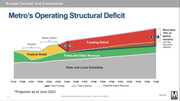
The report says that cuts are being implemented for both metrobus and metrorail services, including less frequency.
Sure they may have extended the blue line, but that's probably just a carryover of a project planned prior to Covid.
I just don't get this over dramatic language they use, to describe these issues.
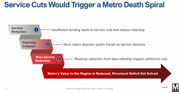 https://transitcenter.org/death-spiral- ... -get-here/
The resource on ridership came from this article written in December 14 and how the ridership is still at half of what the ridership was pre-pandemic
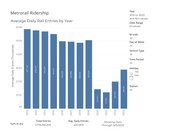
"While Governor Youngkin and others have urged the Office of Personnel Management to issue a “return to work” order for Federal employees in hopes of driving ridership back up, as this chart shows, even if ridership returns to prepandemic levels, 75 percent of WMATA’s deficit will remain. In fact, you could double prepandemic ridership and WMATA would still be in financial deficit. Ridership was trending down before the pandemic, and realistically, the world today is far different. The odds of ridership hitting 2019 levels are very low. If you drew a trend line from the prior 8 years of pre-pandemic ridership, the 2023 level is only slightly lower than would have been expected absent the pandemic. It is also important to know that the miles of rail in WMATA have increased with the addition of phase two of the Silver Line, meaning ridership per station or per mile of track has tanked. WMATA has yet to learn they can’t build themselves out of financial collapse."
https://www.thomasjeffersoninst.org/the ... ankruptcy/
I am just surprised with all the gloom and doom language used in many articles relating to WMATA, maybe its just so that more government funding is applied.
Doctor Fate wrote: Wed Jan 17, 2024 9:15 am
From what I understand, the Metro in these fringe areas like Reston, Ashburn, Huntington, Shady Grove, etc was designed to bring people from these outlying areas into Arlington/DC for work. This was intended to prevent more cars and traffic congestion. It wasn't designed with the intent to also bring people from Arlington/DC out to these areas and then they would walk around and eat, shop, whatever. That's why you have these Metro stations in unwalkable areas with large parking garages, because the areas aren't walkable to begin with and the car-centered suburbanites can drive and park, then ride the Metro in.
Those were my observations as well, and its to be expected that the fringe areas are to not be as walkable; however it doesn't appear the garages are being used because I would leave my car parked and only 5 or so cars would be there, and in total close to 5% occupancy would be seen from the different station garages
Doctor Fate wrote: Wed Jan 17, 2024 12:09 pm
Renovator2559 wrote: Tue Jan 16, 2024 7:59 pm
I find it hard to see Tysons ever becoming like Arlington because of all the culdesac like blocks and Arlington has nice grid linear streets. Also unless they remove the bisecting highways, it will be difficult to make this area walkable without spending a fortune.
Renovator2559 wrote: Tue Jan 16, 2024 7:59 pm
With the exception of the Arlington area, the rest of the metro stations, are isolated from walkable and or downtown areas. So being picked up by car or riding the bus is advisable.
Doctor Fate wrote: Wed Jan 17, 2024 9:15 am
Not entirely true. Metro stops in Alexandria, Potomac Yard, and downtown Bethesda are quite walkable and in transit oriented developments. Not as walkable Arlington, but significantly more walkable than Reston, Tysons, or anything else west of Arlington.
Well, that area is the surrounding area of Arlington, so I wasn't discounting these areas; as these areas are very close to DC. My observations were aimed at any of the raised metro stations on the west of Claredon on the Silver Line.
Doctor Fate wrote: Wed Jan 17, 2024 9:15 am
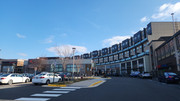
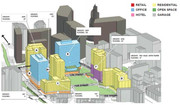
Tysons is full of big blocks and surface lots. The street grid is very minimal but the winding streets were designed to slow traffic. A grid approach is something Tysons is actively trying to develop and was dictated in the most recent master plan.

Edit: This progress as of June 2023. Lots of streets left to build to break up surface lots and big blocks.
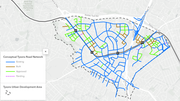
The highways and major streets I mentioned are not being removed. What it looks like they are trying to do, according to their master plan and how I have seen their developments trending, is to build walkable areas around the four Metro stops (with the exception of the Tysons station). This works around the highways and major streets that break up Tysons and kind of makes the stations like central hubs. None of the Tysons Metro stations have parking lots like Reston and other outlying stations, though some have small parking lots. But this also creates the availability for people to use the Metro to get around the highways and major streets.
They are also transitioning new and existing main streets or "collector" streets to be 4 lanes (2 each way), along with a designated bike line each way, and then a parking lane on each side. New side streets or "local" streets would be 2 lanes (1 each way).
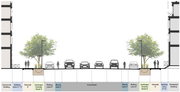
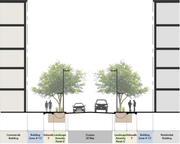
Wow, this is a nice proposal! This is a good case of how a grid-like system can be implemented to create smaller blocks on what appears to be a hostile pedestrian layout and turn it into a wonderful human scale street layout. With this high investment, I can already picture how Tysons will look like; just as good as Clarendon!
As these red zones continue to bleed population, most likely some of them will move to the DMV area, while at the same time some existing DMV residents move out. Some people I know from the DMV want to move out because they can't stand the traffic, overcrowding and fluctuations in demand but that's their experience. So I am not surprised if local residents leave while new residents move in, thus equalizing the outflow of residents.
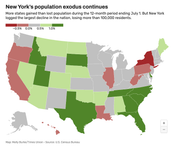 https://www.timesunion.com/capitol/arti ... 565577.php
DC is a good area, for visiting.



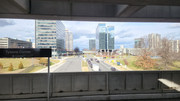
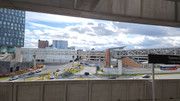
 but with parking lot strip mall galore everywhere in front of the residents balconies!